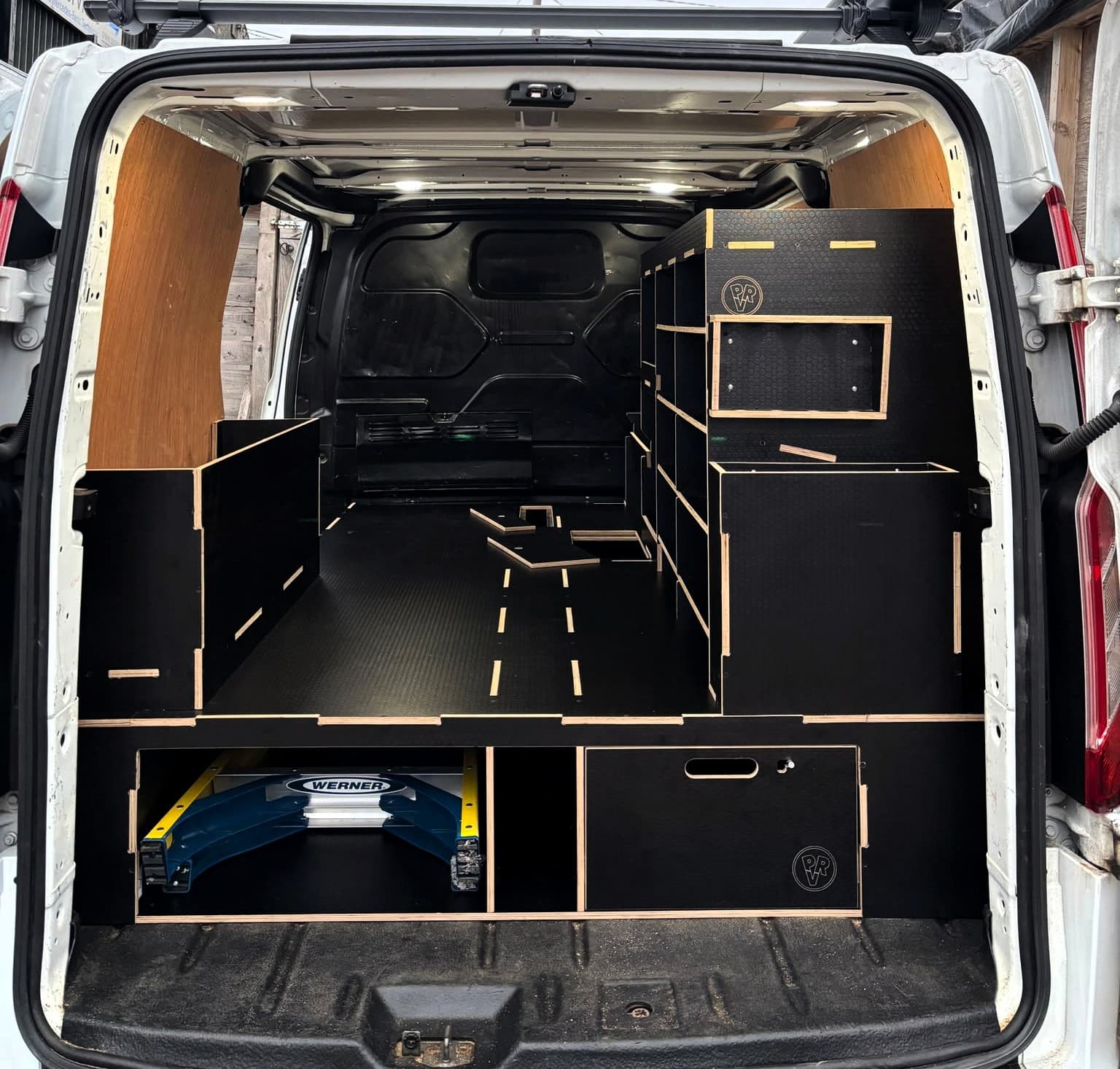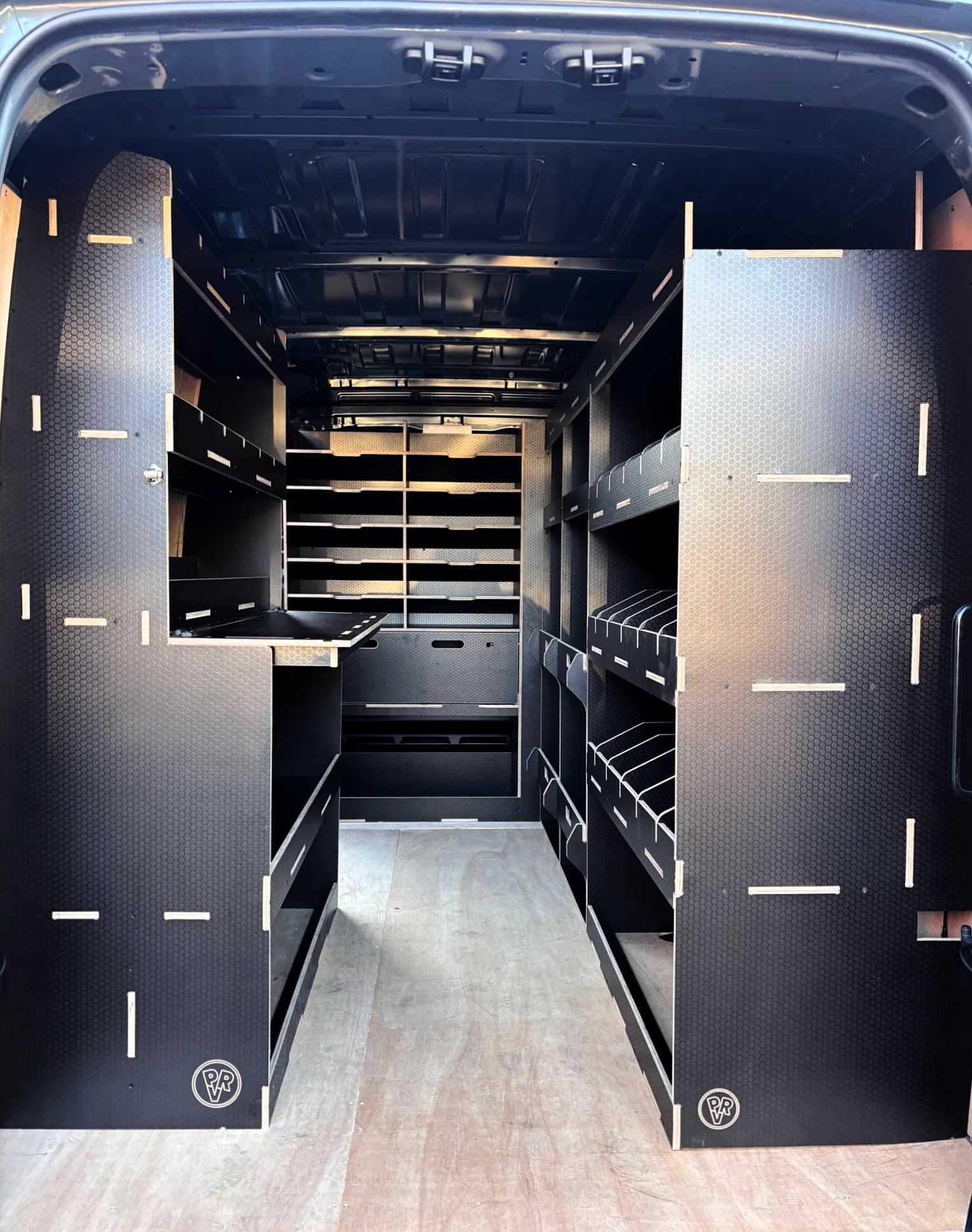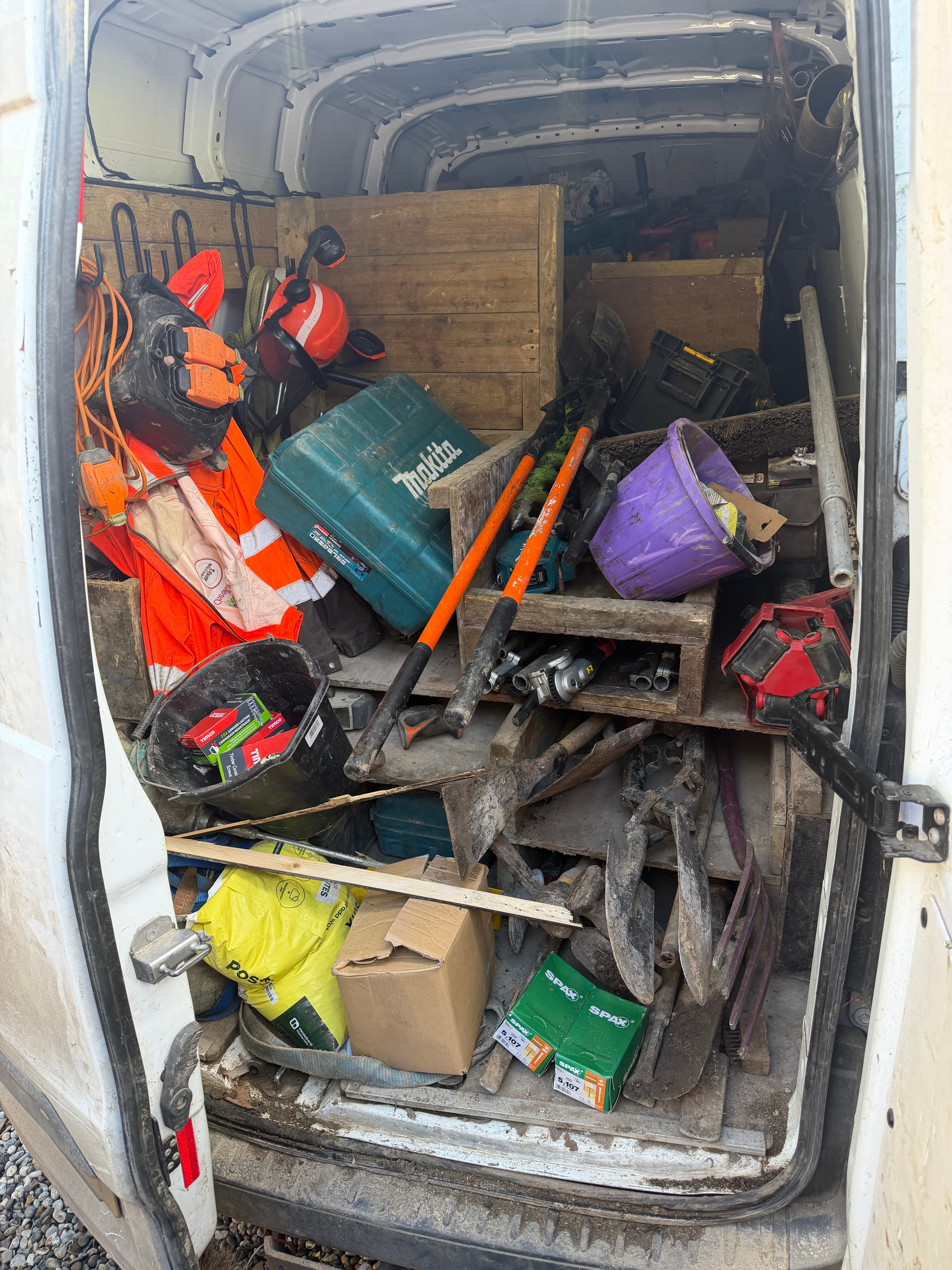
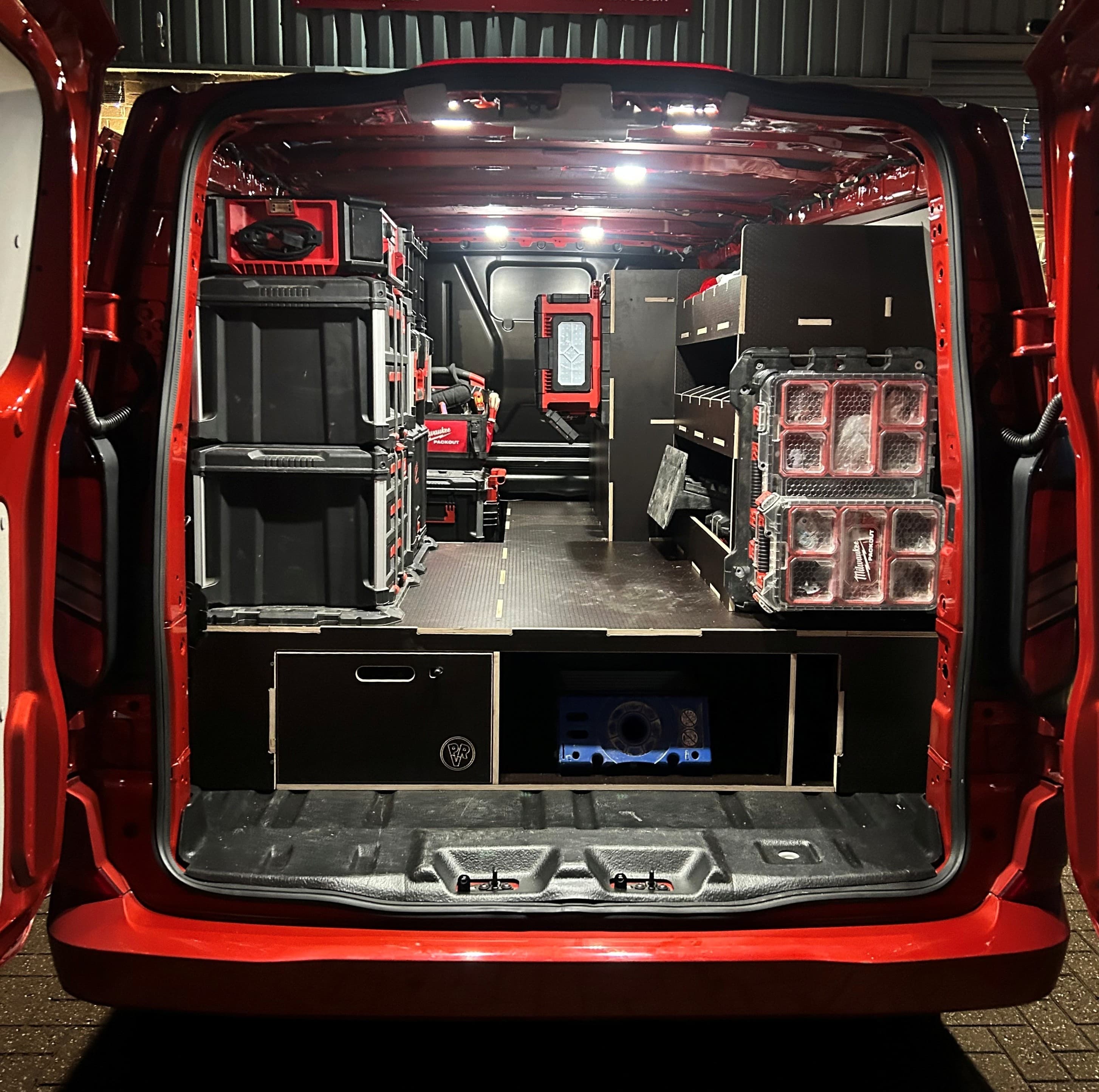
A workshop works because everything has a place, the light is right and there's a surface to work on. Almost none of that has to stay behind when you drive off — here's how a van gets laid out to be worked from rather than just loaded up.
Nobody working in a decent workshop has to think about where anything is. The bench sits under the window, the fixings are on the wall above it, power is where you need it, and everything goes back on the shelf it came off. You could find most of it in the dark.
Vans usually get treated as the opposite of that — a space things get put into rather than a space designed to be worked from. The tradespeople who consistently get more done in a day have closed that gap. Their van isn't storage that follows them around; it's a workshop with wheels, laid out so it's ready to work from the second the doors open.
Position everything by how often you touch it
Any workshop that functions has zones you can read without being told: assembly here, consumables on the wall, the kit you use daily at arm's reach and the kit you use twice a year up high or out of the way.
That's the whole principle, and it moves straight into a van. Frequency decides position. Daily tools at the doors, at waist height, one movement to reach them. Weekly kit higher up or further forward. The gear that comes out once a month goes underfloor, over the arch or down at the bulkhead end.
Get that order right and you stop unloading half the van to reach the one thing you always need — which is where most of the wasted time in a working day quietly goes.
Stock you can't see is stock you'll buy twice
The other thing workshops do that vans rarely do is keep stock visible. On a workshop wall you can tell at a glance that you're down to two of something. Tipped into a holdall you can't see anything, so you find out you're short on site with the customer waiting, or you buy another box of what you already own three of.
Open shelving, wire fronts, clear-lidded containers and shallow drawers all do the same job: they turn your stock into something you can read in two seconds instead of something you have to dig through. One item type per compartment, labelled, and the van tells you what it needs before you leave the yard on a Monday morning.
Give yourself somewhere to actually work
A workshop's defining feature isn't storage, it's a surface. Plenty of van-based work still ends up done on the customer's floor, across a wheelbarrow, or on the tailgate in the rain — and all of it takes longer than it should.
A fold-down worktop off the side racking — like the drop-down desk in our dual-side racking with workbench — costs almost nothing in space and changes the job. Somewhere flat to cut, terminate, mark out or assemble, at the right height, with a small vice bolted to it if the work calls for one.
Then finish it the way you'd finish a bench. LED strips down both sides so you're not working off a head torch at four in the afternoon in December. A leisure battery or inverter with sockets near the doors so chargers run between jobs and you arrive with full batteries rather than one good pack and three flat ones. And a bin, because a van without one becomes a skip by Thursday.
It only counts if it's still like that in six months
Any setup looks good on day one. What separates a workshop from a tidy van is that the workshop is still laid out the same way years later, because the layout is built in rather than balanced in place.
That means racking bolted through the van's own load-rated mounting points rather than screwed into ply on its own. Ply lining behind it, so the panels aren't taking dents and starting to rust where you can't see. Materials that cope with wet kit and daily loading — natural ply or hex phenolic rather than something that swells its way through the first winter. And a fixed home for everything, so putting the van straight at the end of the day takes two minutes instead of a Saturday morning.
Set your van up to be worked from
You've already got the skill and the kit. A van laid out as a workshop simply stops the van getting in the way of either. Take a look at our van racking and ply lining systems to see how it goes together, or book a free design consultation and we'll plan the layout around the way you work.
Tags
- van organisation
- van setup
- mobile workshop
- van racking
- tool storage