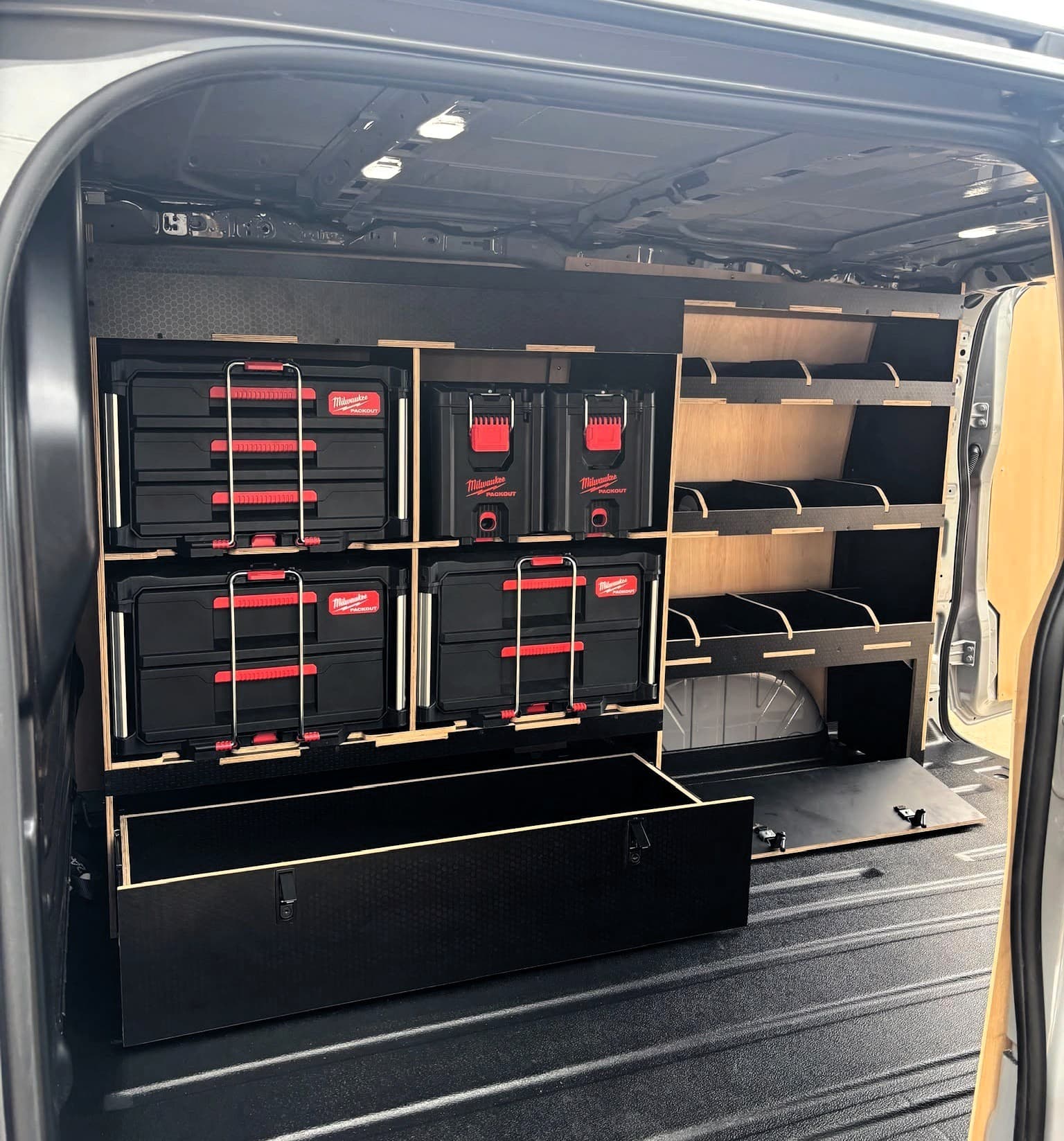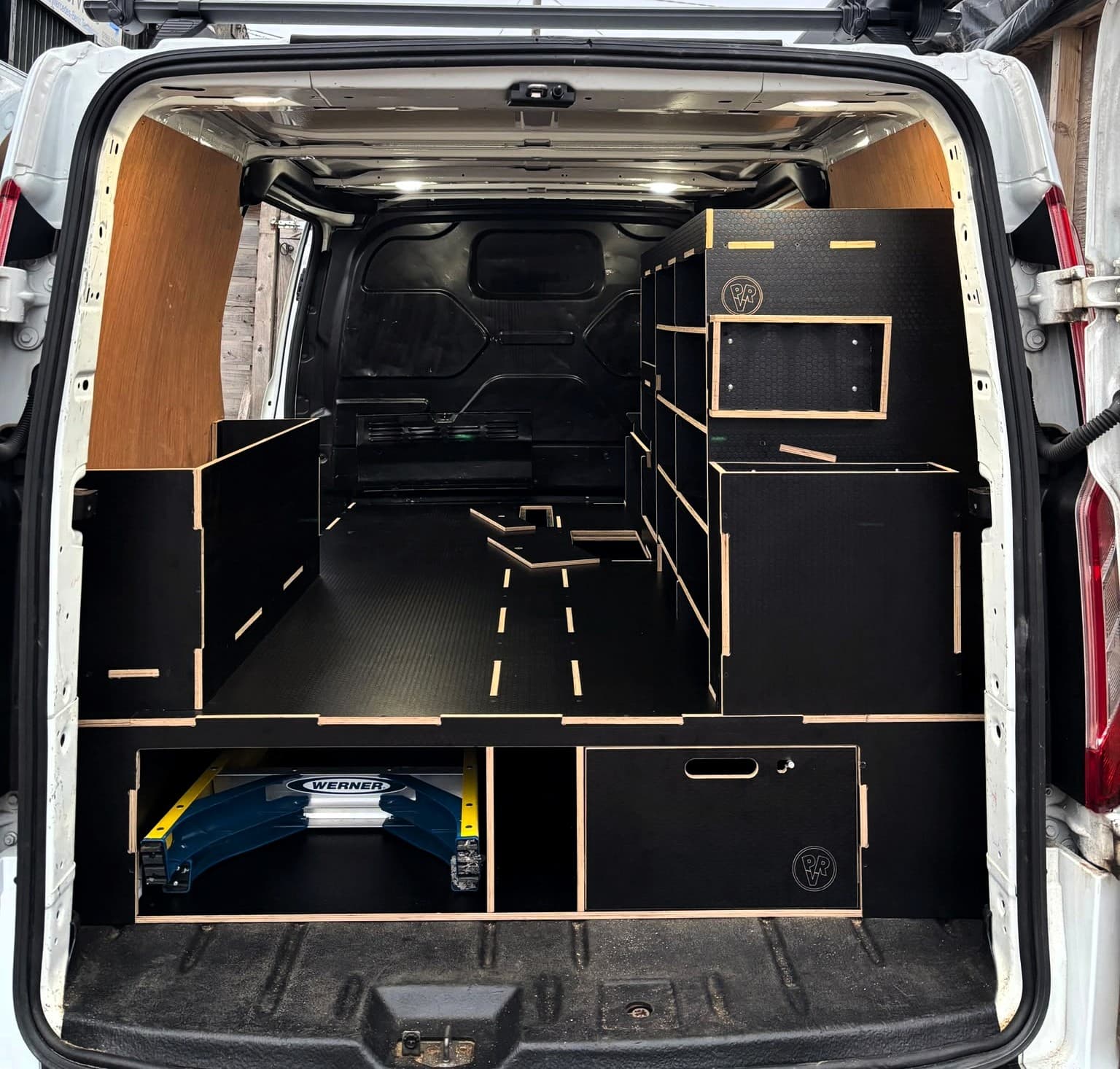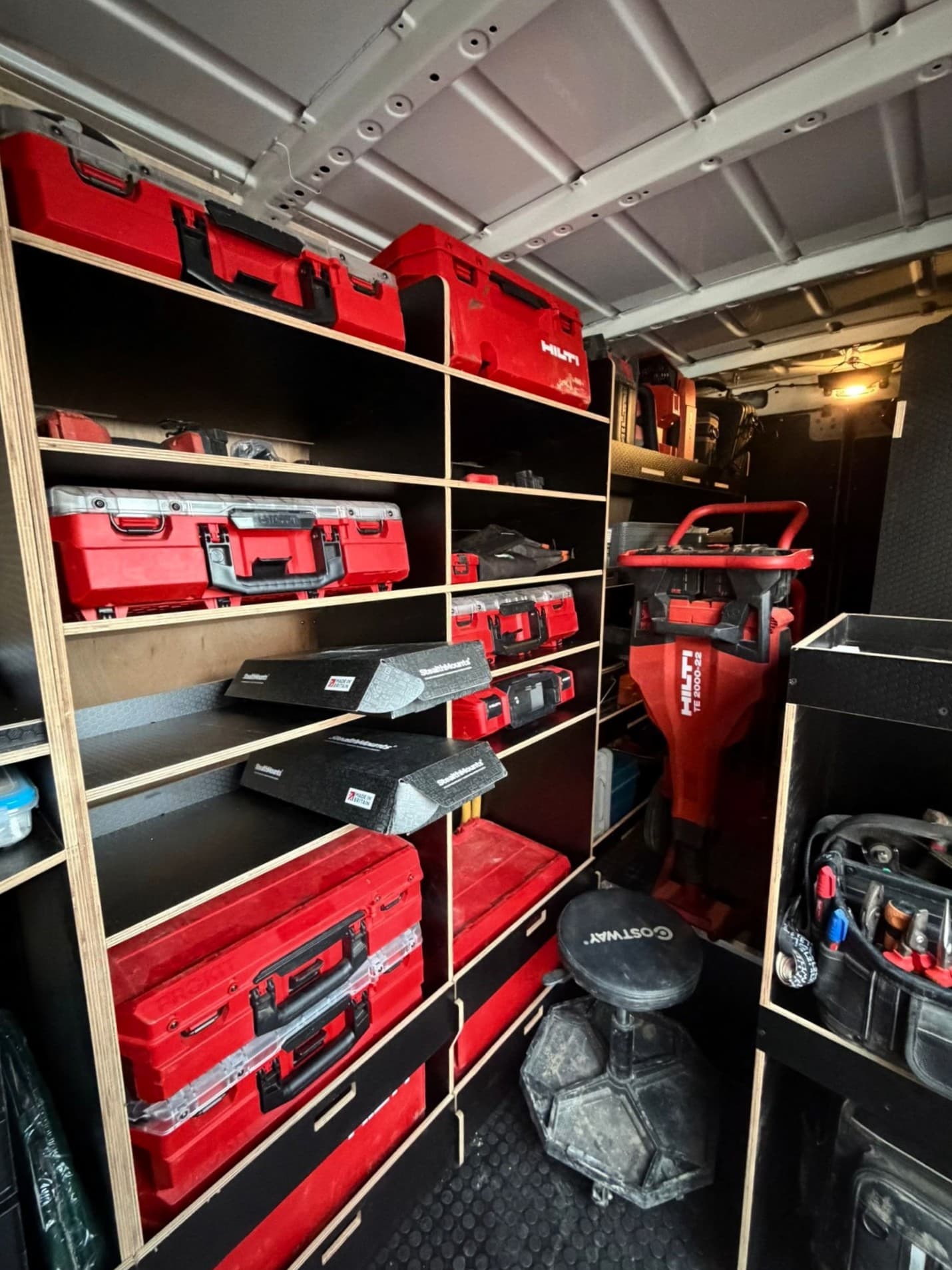
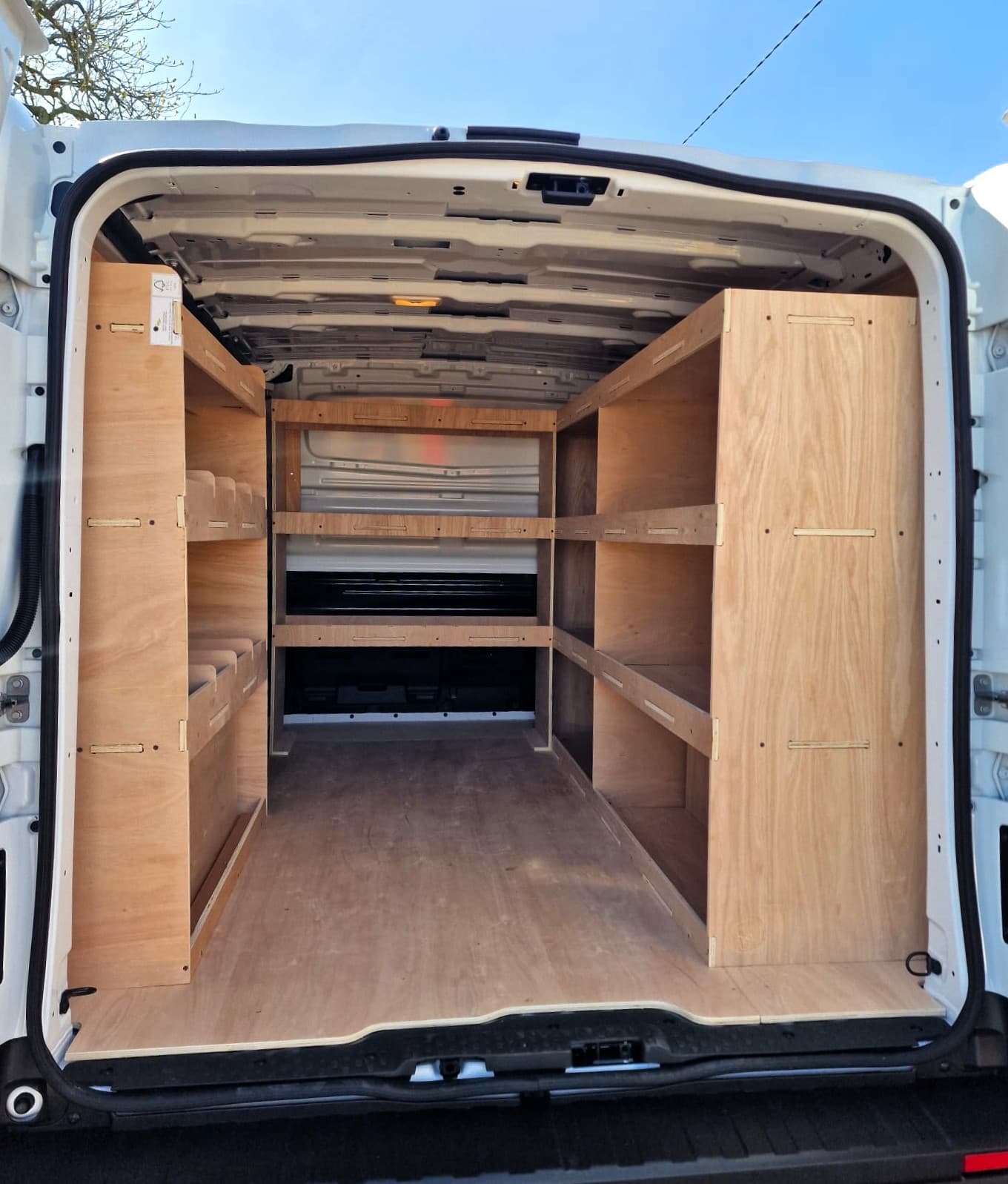
Not all van racking is built the same. Here are the details that separate a fit-out you'll still love in five years from one you'll be ripping out in two.
When you're spending a few thousand pounds turning a van into a mobile workshop, the details matter. A good fit-out makes you faster every day, protects your tools, and adds value when the van eventually moves on. A bad one creates rattles, hides damp, and gets ripped out within a couple of years.
Materials are the first tell
The single biggest determinant of how long racking will last is the plywood it's made from. Marine-grade or phenolic-faced birch ply with sealed edges is the only spec worth paying for in a work van. It is structural, water-resistant, and grips fixings properly.
Watch out for installers who use generic structural ply or, worse, MDF. Both look fine on day one. Both will warp, swell, and start delaminating the first winter you use the van.
Fixings should not move
Every shelf, every drawer, every divider should be screwed and glued — not just stapled. If you can wobble a shelf with your hand, it will eventually work loose on the road. Cargo-shifting accidents are not theoretical; they're routine when racking is fitted on the cheap.
Ask how the racking is fixed to the van. The best installers use a mix of structural rivnuts in load-rated body points and through-bolts where the structure allows. Sheet-metal screws straight into the body are a red flag — they pull out under load and leave rust trails.
Think about how you actually work
The best racking is shaped around your day, not pulled off a shelf. Where do you reach first when you open the side door? What needs to live on the floor for weight reasons? Where is the kettle going? These are the questions a good fitter will ask before sketching anything.
Generic, one-size-fits-all kits are a false economy. They look the same as bespoke from the outside, but you'll spend the next five years reaching past tools you never use to get to the ones you do.
Lead times matter both ways
A fitter who can do your van next week probably isn't busy for a reason. A fitter who quotes you twelve weeks ahead is busy, but you don't want to wait that long. The sweet spot is somewhere between two and six weeks — enough that the workshop is well-run, not so much that the van sits earning nothing.
Get a written quote
This should be obvious, but: get the specification in writing. Plywood grade, fixings, drawer counts, finish, warranty terms, included fitting time. A written quote stops the "oh, that's an extra" conversation halfway through the build.
We invite every customer to a free 30-minute design consultation at our workshop before any work is booked. You see the materials, watch a build in progress, and leave with a fixed quote. There's nothing to hide.