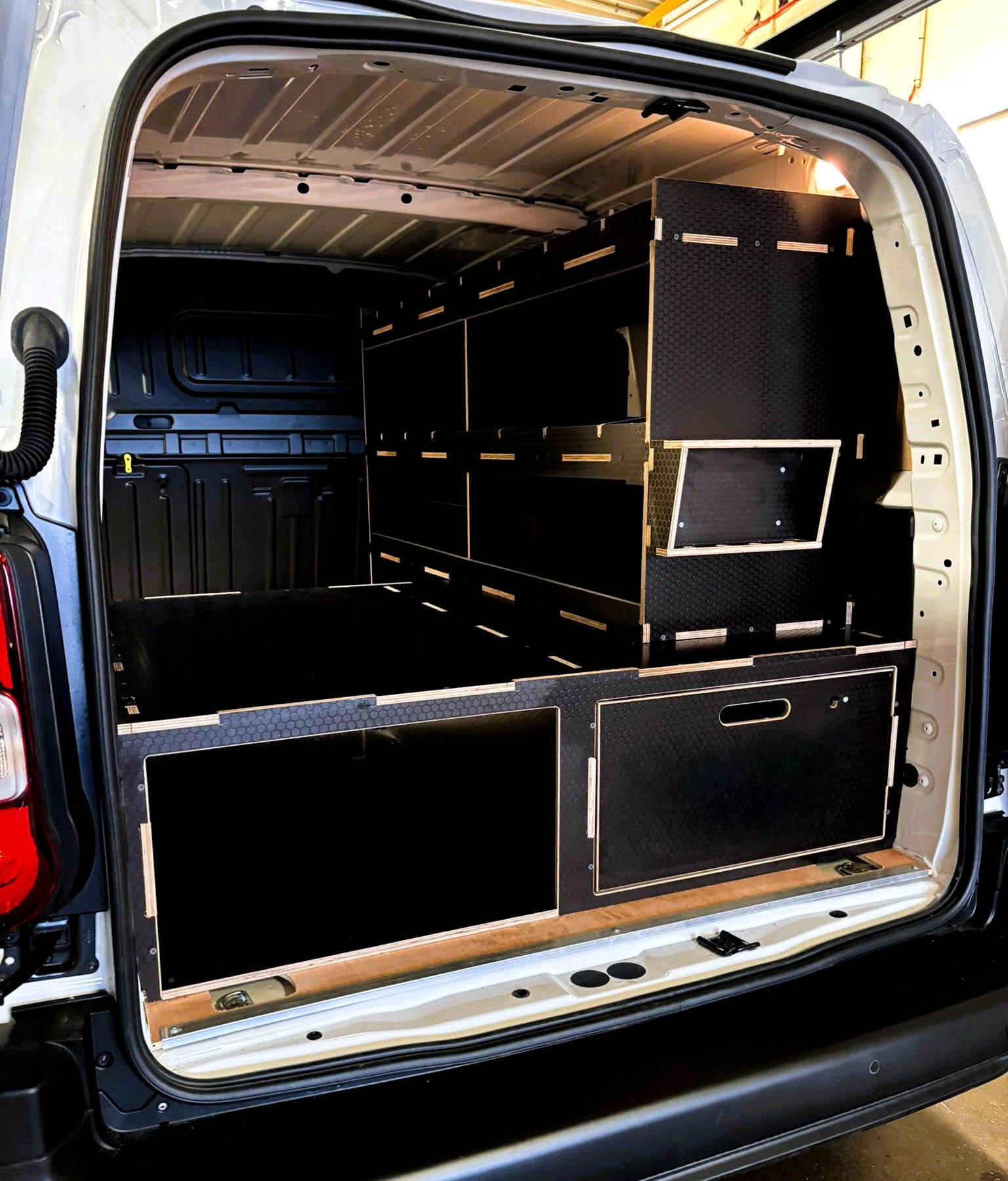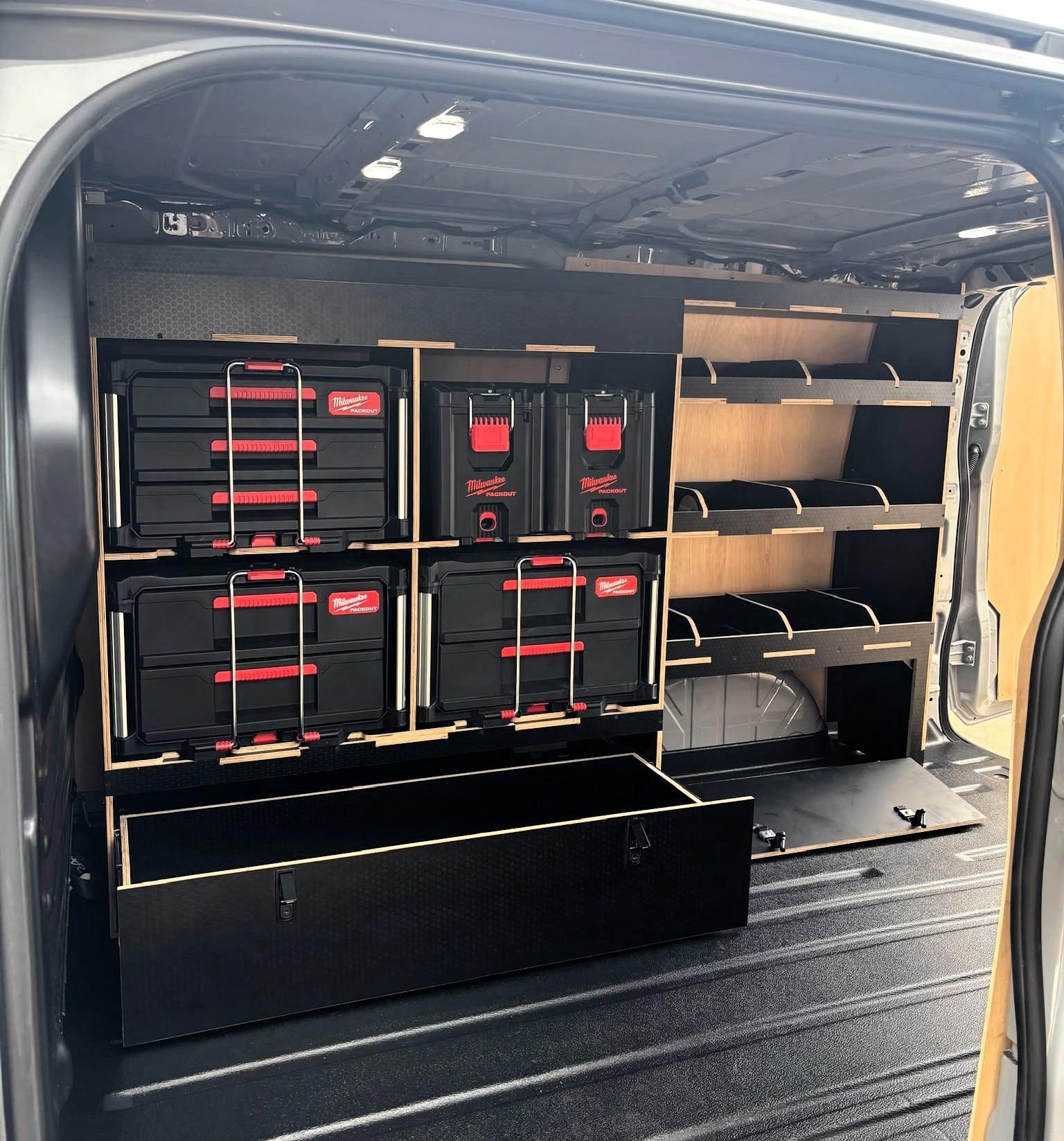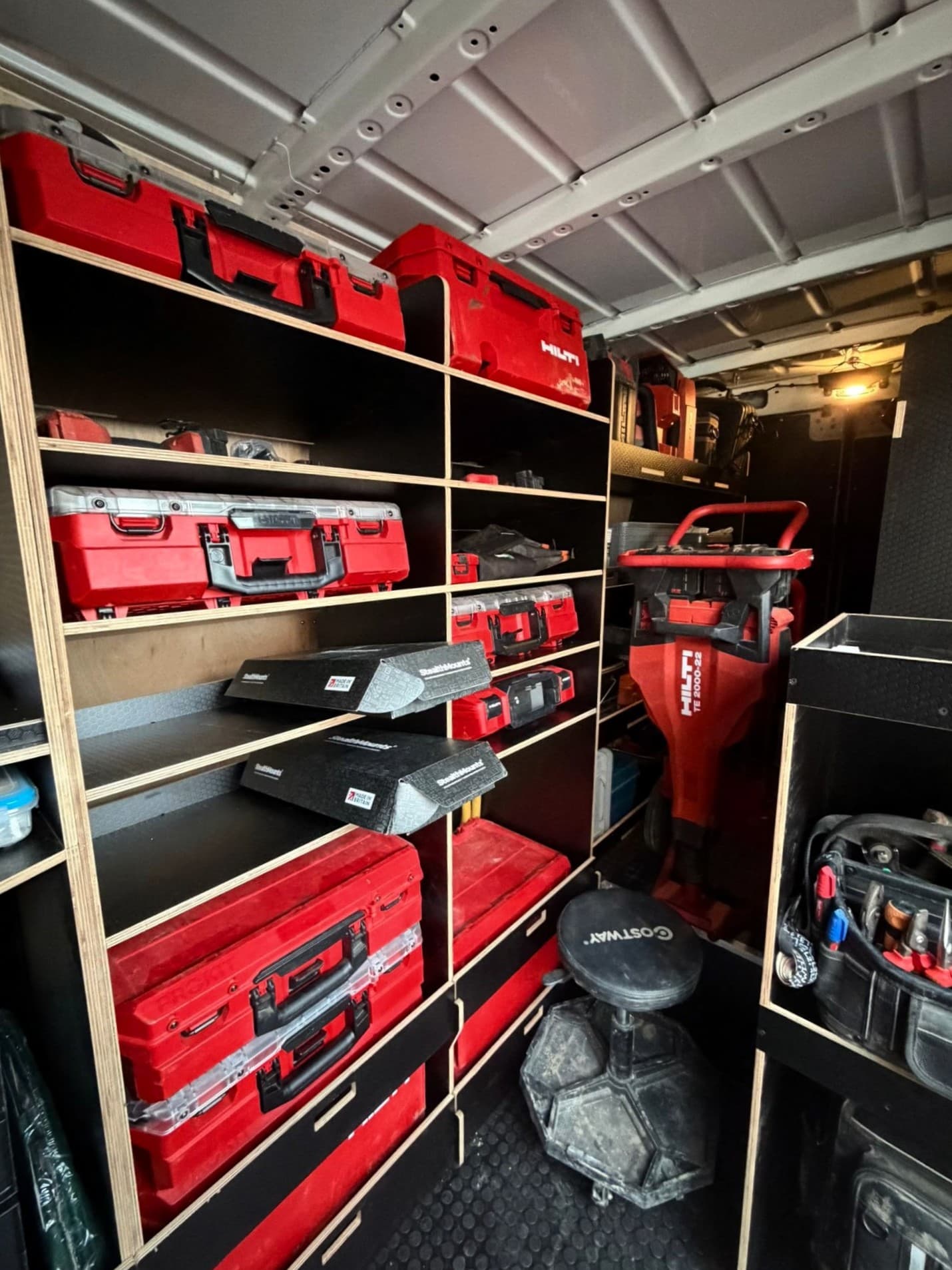
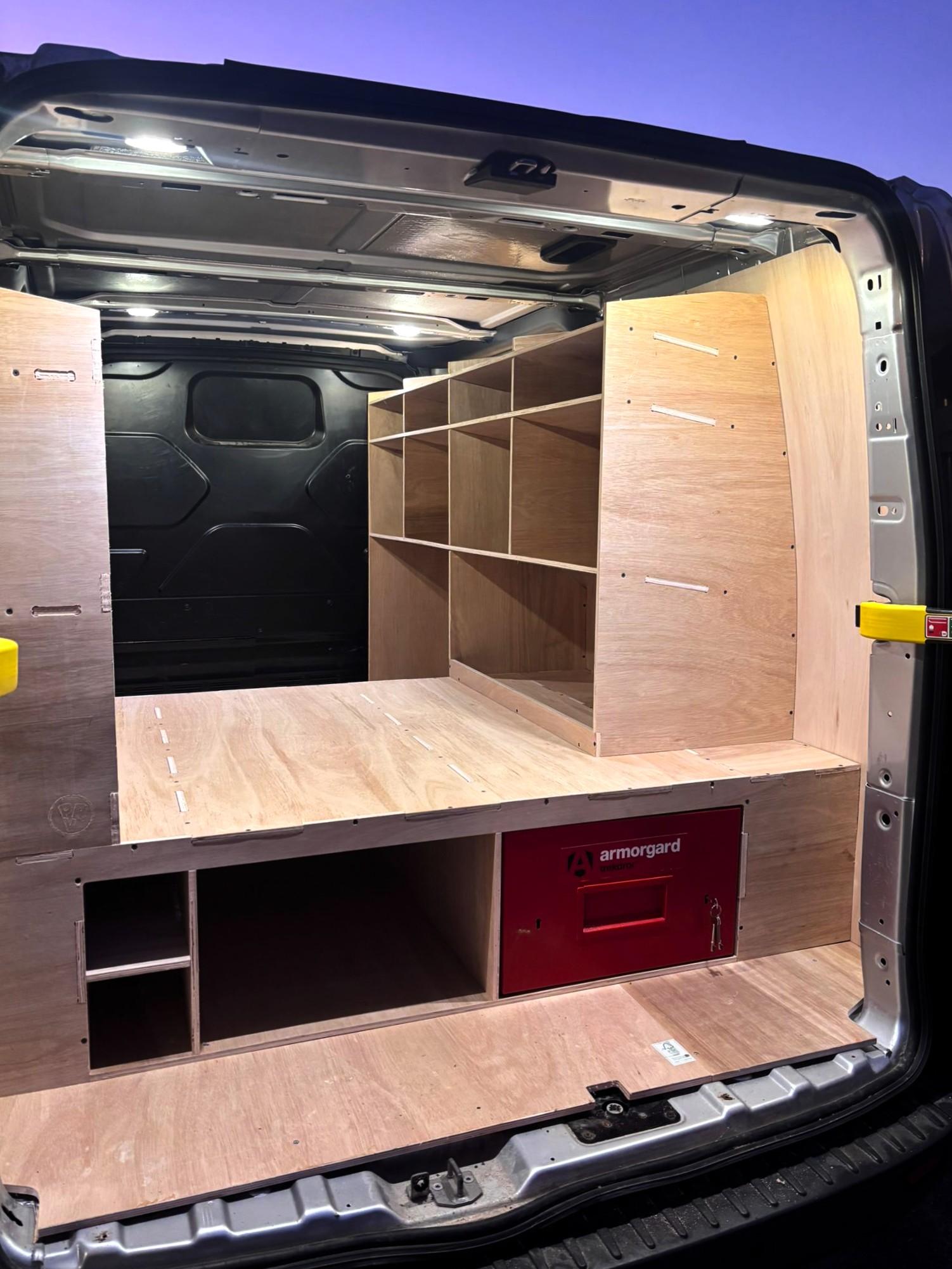
The clocks go back this month, the ground stops drying out, and every weakness in a van starts to show. Getting the fit-out done now means going into the worst of the year with the van already sorted.
The clocks go back at the end of this month. From then until February you're loading in the dark, unloading in the wet, and putting gear away that hasn't properly dried out since the week before. Every weakness in a van shows up in winter, and the vans that cope are the ones that were sorted before it started.
Autumn is the sensible window for that work, and not just because the weather's about to turn. Here's why October is when it's worth doing.
Winter finds every weakness in a van
Summer is forgiving. Kit goes in dry, comes out dry, and a van with bare metal sides and tools on the floor gets away with it.
From now on it's mud, grit and standing water coming in on everything. Bare panels take the knocks and start rusting where you can't see. Condensation forms overnight and sits on whatever's underneath it. Anything cardboard turns to pulp, anything steel starts spotting, and the load area smells of wet all winter because nothing ever gets the chance to dry.
A lined load area with a sealed, hoseable section for the wet and dirty kit stops most of that. Not because it keeps the weather out — you'll bring that in regardless — but because it separates the stuff that's soaked from the stuff that can't be, and it gives you a surface you can actually clean out on a Friday rather than live with until spring.
You don't lose the hours, you lose the daylight
The working day doesn't get shorter in December, but the useful light does. By mid-afternoon you're loading and unloading in the dark, often on an unlit drive or a site with the compound lights off.
That's when a van without a layout gets genuinely slow. Hunting through a pile with a head torch takes three times what it does in daylight, and it's how things get left behind, dropped or stood on. Fixed positions and visible storage matter far more in the dark than they do in June — if everything has one known home, you can load the van half by feel.
Worth building in while the van's being done: LED strips down both sides of the load area, and a light that comes on with the doors. It's a small part of a fit-out and it's the part you'll notice every single afternoon from now until March.
The run-up to Christmas is the busiest stretch of the year
Most trades get a surge between now and the shutdown. Customers want work finished before Christmas, insurance and landlord jobs get pushed through before year end, and the diary tightens up.
That's exactly the wrong time to be losing twenty minutes a day to a van you have to dig through, and it's the wrong time to take the van off the road to have work done on it. Doing it now means you go into the busy weeks with the van already working for you, rather than trying to fix the problem while you're flat out.
Fit-out slots are easier to get now than in January
There's a predictable rush in the new year — new vehicle on the fleet, new year's resolution, or simply having spent December fed up with the current setup. Autumn is quieter, which means more choice of dates and less waiting.
It also means the van is off the road at a time you can plan around, instead of in the middle of your busiest fortnight or when you're trying to catch up in January.
Get it sorted before the weather does it for you
A fit-out isn't a winter job in itself — it's what makes winter manageable. Lined, lit, laid out, with somewhere for the wet kit to live and everything else in a fixed position you can find in the dark. Take a look at our van racking and ply lining systems to see what goes into a full fit-out, or book a free design consultation and we'll plan one around your van and your trade before the clocks go back.
Tags
- van fit out
- van racking
- winter van setup
- ply lining
- van organisation