Every kilo you add to an electric van is a kilo it has to carry all day, and range is the first thing to notice. Here is how to fit one out properly without spending your working range on weight you do not need.
Weight has always mattered in a van. In an electric one it is simply more visible. Where a diesel quietly absorbs a heavy load with a bit more fuel, an EV shows you the cost on the dash: shorter range, and a longer stop when you plug in.
That is not an argument against electric vans, and it is not an argument for going without a fit-out. It is an argument for a fit-out designed with weight in mind from the start, which is worth doing in any van and essential in this one.
Weight is the lever you actually control
Range depends on a lot of things you cannot do much about: the weather, the route, the traffic, how the van is driven. Payload is the one you decide.
Moving mass takes energy, and you are moving it every time you pull away. Regenerative braking gives some of that back on a stop-start urban round, which is why electric vans suit that work so well, but it never gives all of it back. Carry weight you do not need and you pay for it on every journey, all year.
The practical point is that trimming unnecessary weight is the cheapest range you will ever buy. It costs nothing, and unlike a bigger battery it is available to you today.
Check your own payload before you design anything
This is the step people skip. Batteries are heavy, and on a lot of electric vans that shows up as a tighter payload than the diesel equivalent of the same size.
So start with the number on your own van's plate rather than an assumption, and work out honestly what is left once you have subtracted yourself, any passengers, the racking and a full load of materials. Do that before anything is designed, not after it is fitted.
Two things worth checking while you are there. First, your van's real-world range with a load on board, which is usually some way off the headline figure. Second, the current licence rules: there are concessions for heavier alternatively fuelled vans, but the conditions change, so confirm where you stand rather than relying on what someone told you last year.
Lighter materials, and only building what you need
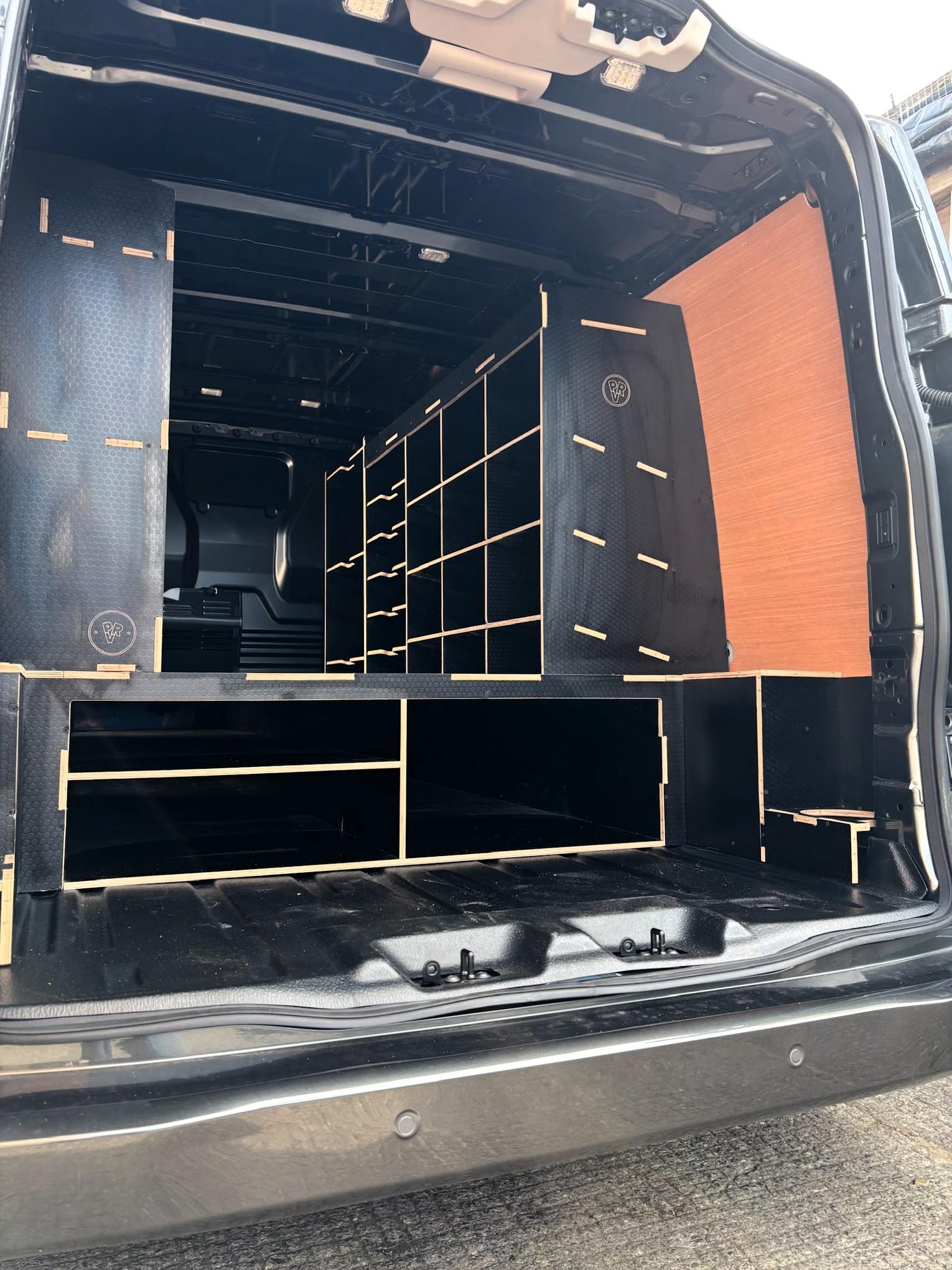
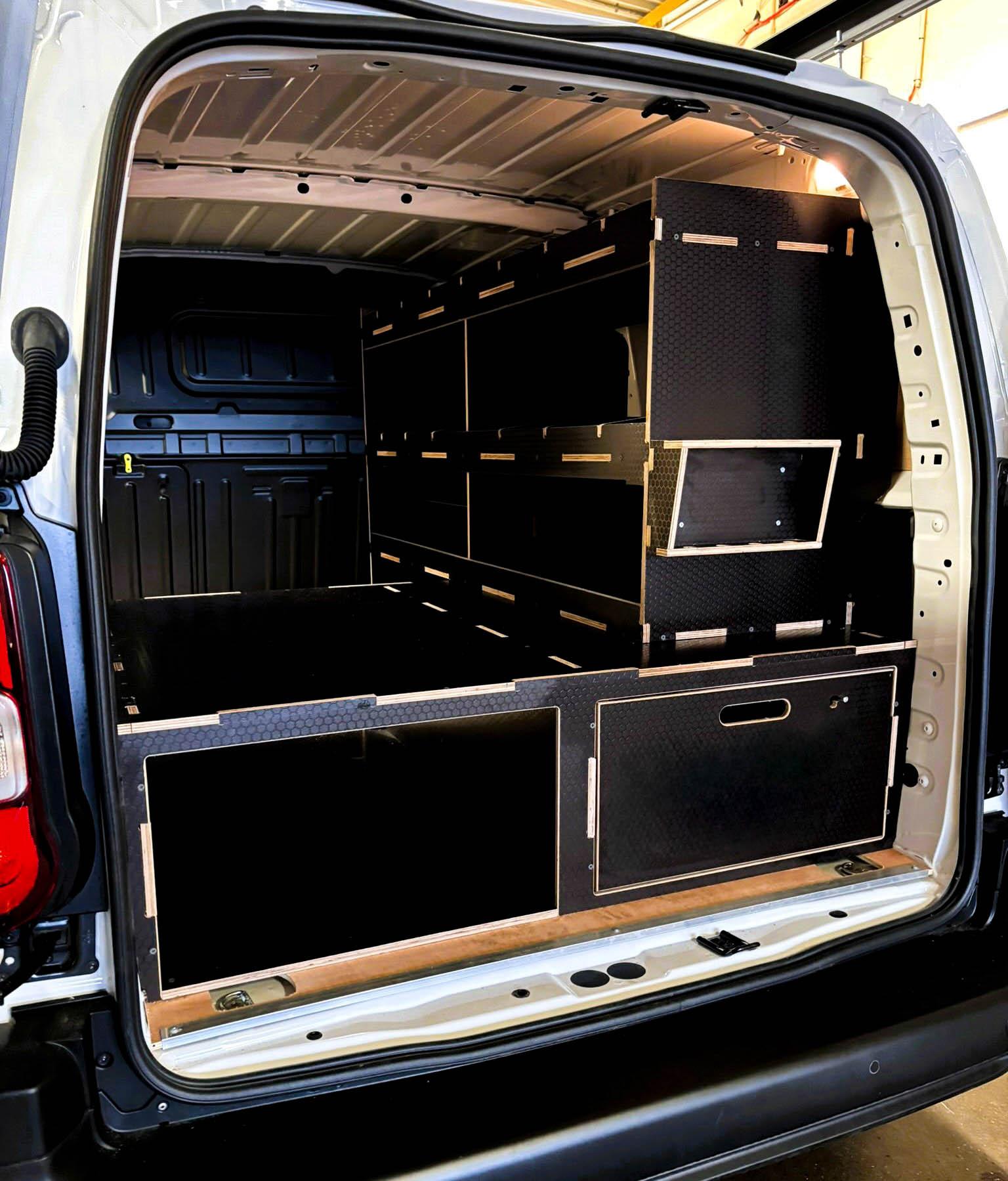
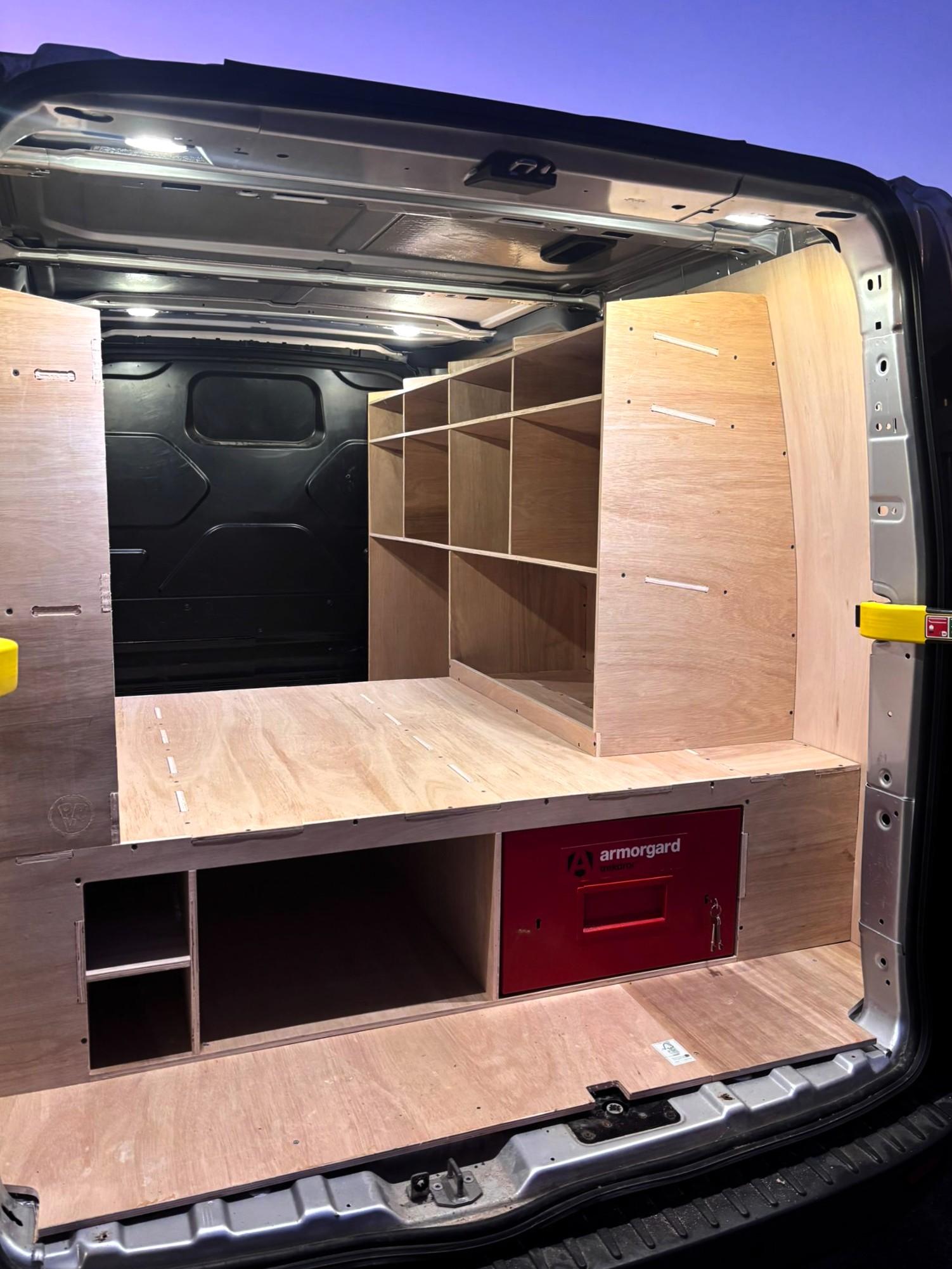
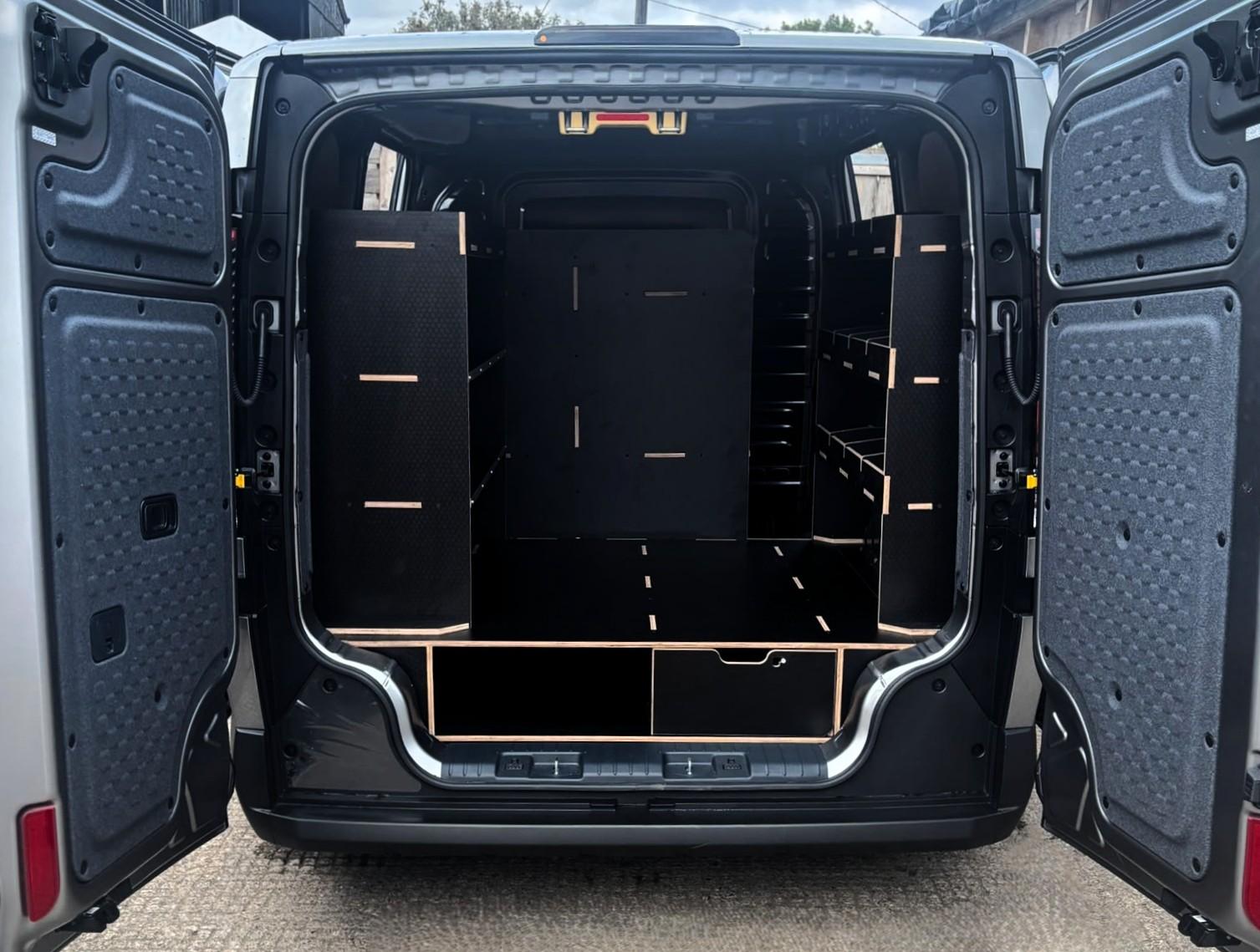
Material choice is where the easiest savings are. A steel racking system carries a weight penalty you feel every day. Ply and hex phenolic give you the strength and durability without it, which is a large part of why we build in them.
The bigger saving, though, is in how much you build. A system designed around what you actually carry is lighter than a generic one with shelves that never get filled, because every panel you do not need is weight you are not carrying.
That means being honest at the design stage. Open shelving instead of enclosed cabinets where you do not need the enclosure. Shallow units rather than deep ones you cannot reach into anyway. One well-placed drawer instead of three that mostly sit empty. None of it is about going without. It is about not carrying structure that does no work.
Where the weight sits, and what travels with you
Two habits matter once the van is built.
Keep the heavy items low and over the rear axle rather than stacked high or hanging out behind it. That does not change the total, but it changes how the van handles, how it wears tyres and how settled it feels loaded.
Then be disciplined about what lives in the van permanently. Most vans carry a surprising amount of kit that has not been touched in months, and in an electric van that dead weight is costing you range on every trip. Visible storage helps here, because you can see what is in there and notice what never moves. A quick strip-out every few months is worth more than most things you could buy.
Build it light and build it once
An electric van does not need less of a fit-out, it needs a better thought out one. Take a look at our van racking and ply lining systems to see how we build in ply and hex phenolic, or book a free design consultation and we will plan a layout around your van's payload, your trade and the kit you genuinely carry.
Tags
- electric van racking
- electric van fit out
- van payload
- lightweight van racking
- van organisation