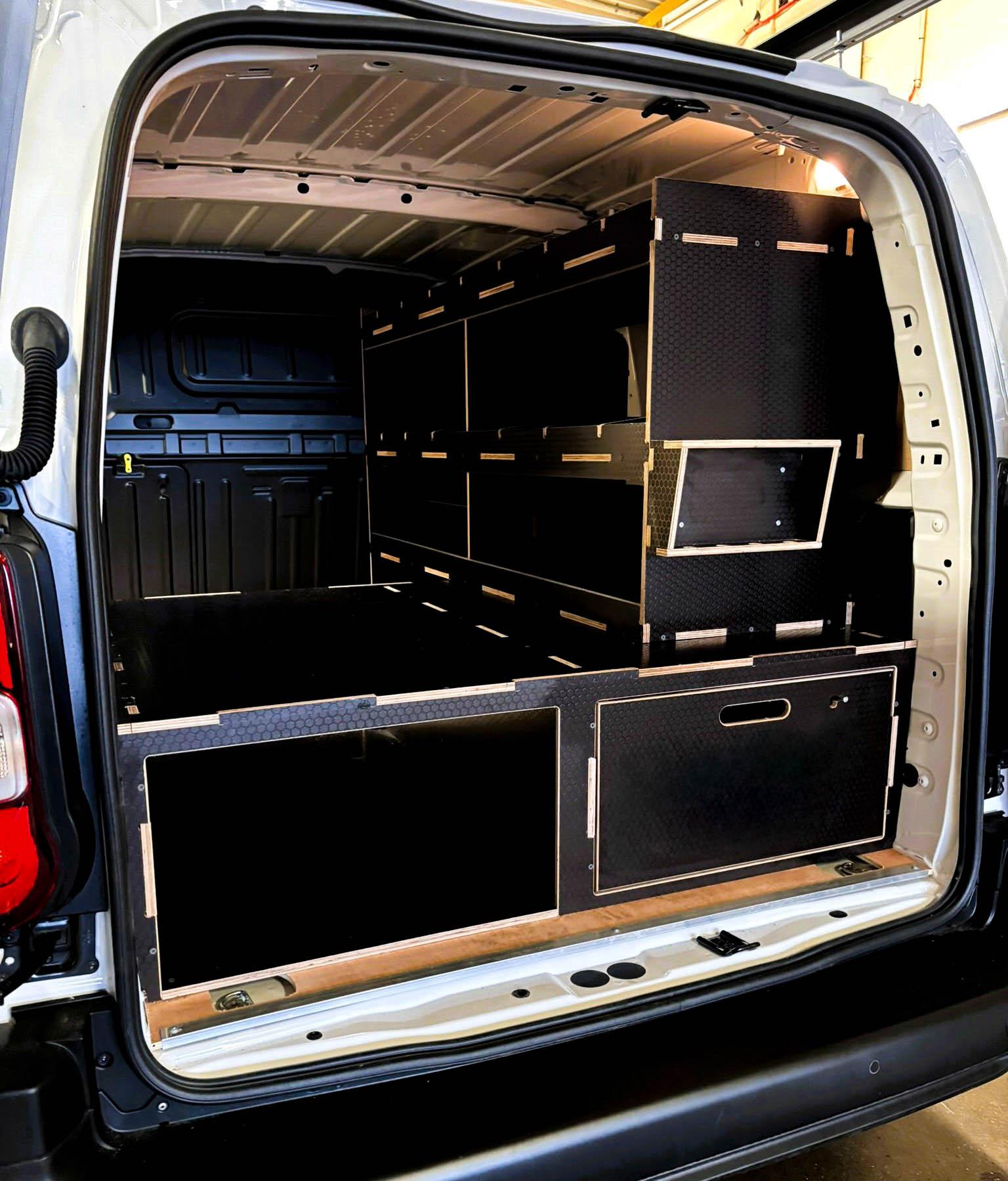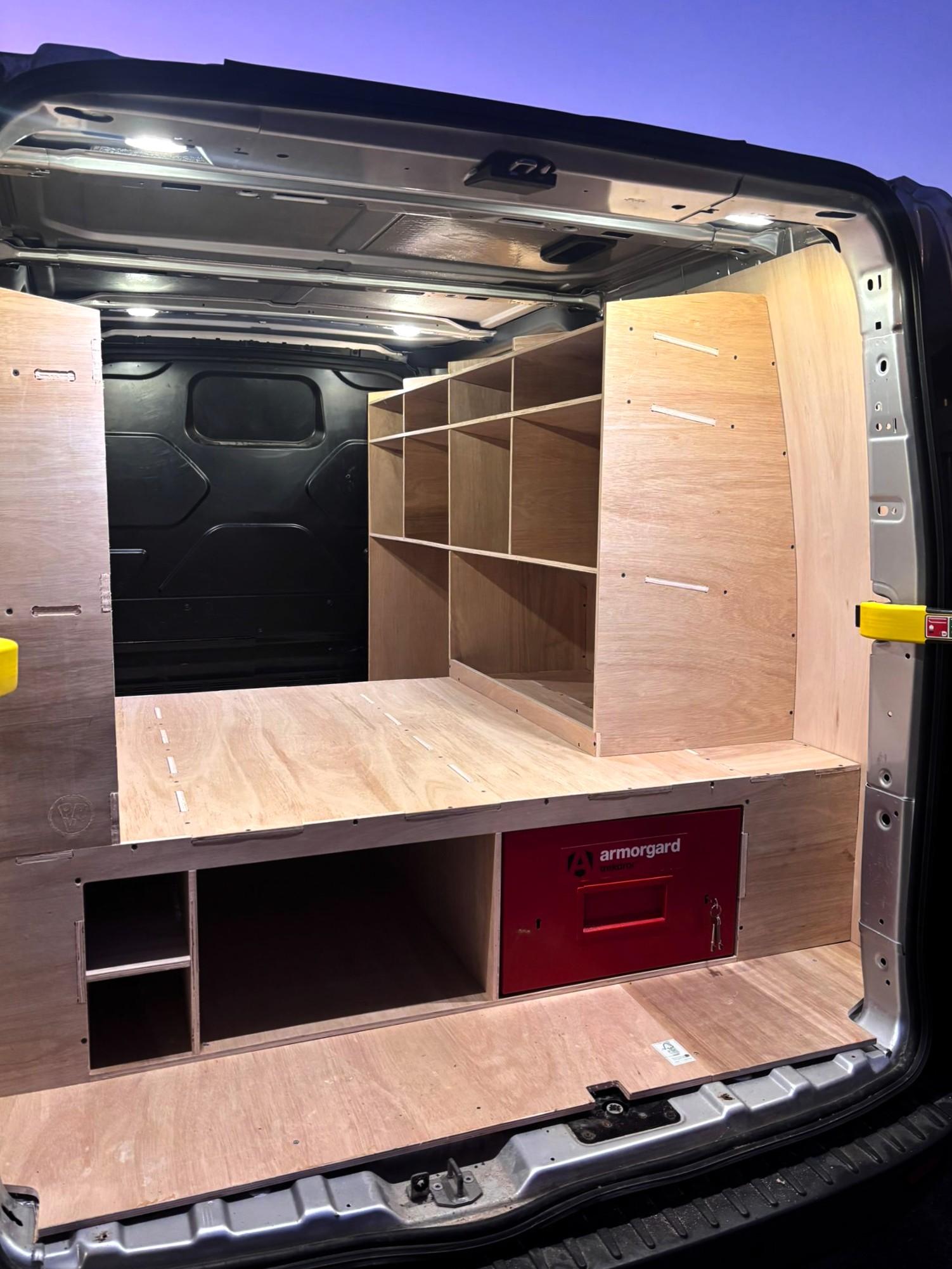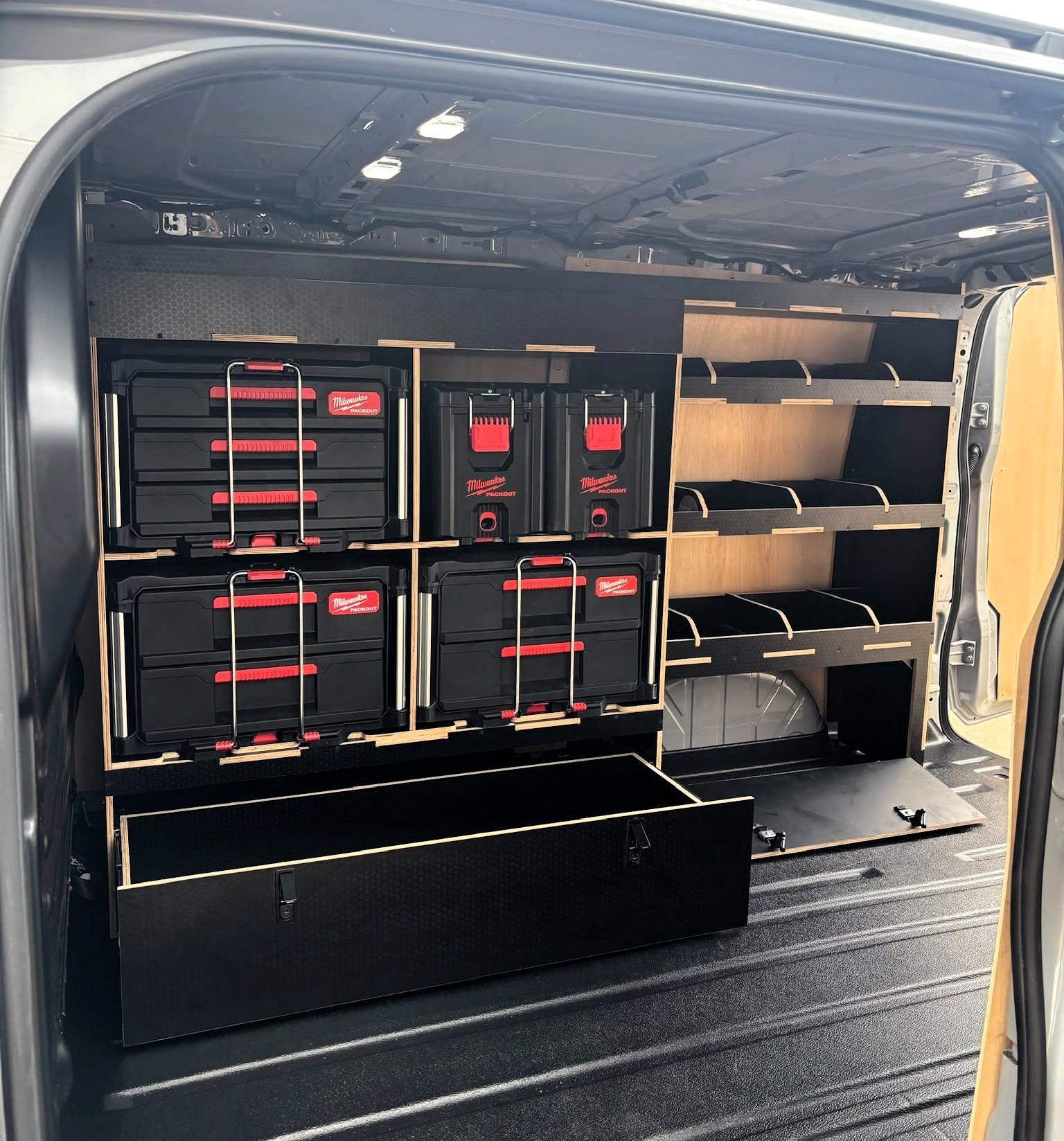
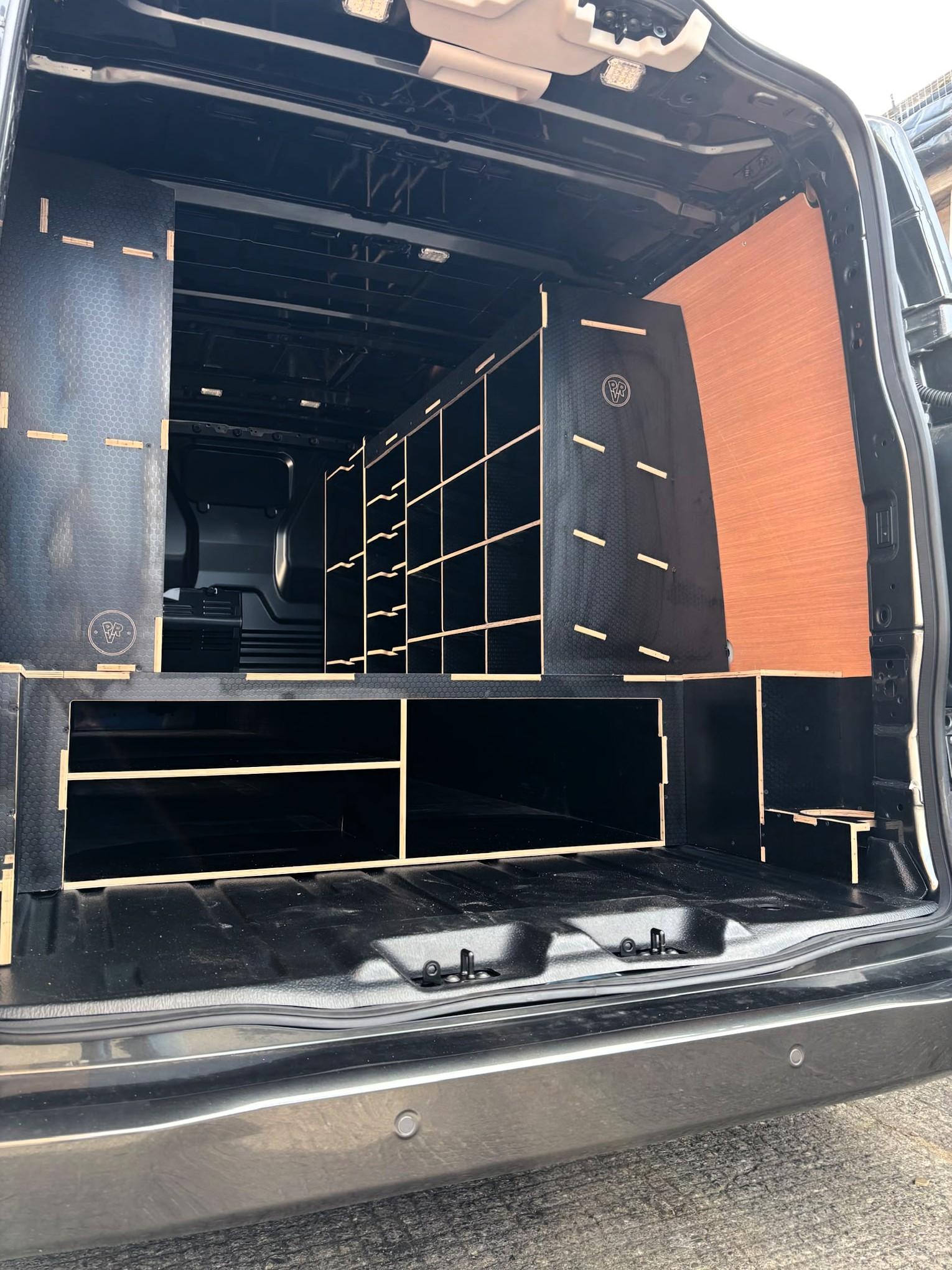
Most of what makes a fit-out good or bad is settled before anything gets cut. Here are the decisions worth getting right while they are still easy to change.
A fit-out is one of the few things you buy for the van that you will live with every working day for years. Almost everything that makes one good or bad is decided before anything gets cut, which is the point at which changes cost you nothing.
If you are at the research stage and have not ordered yet, these are the decisions worth spending time on.
Start with what you carry, and how often you reach for it
The most useful hour you can spend is emptying the van onto the drive and sorting the contents into three piles: every job, most weeks, and occasionally.
That sorting is what determines the layout. Daily kit belongs at the doors at waist height. Weekly kit goes higher or further forward. The gear that comes out once a month goes underfloor or over the arch. Get that order wrong and you spend the next five years moving three things to reach a fourth.
It also tells you what you do not need to carry at all. Most vans have a surprising amount of kit that has not been touched in a year, and racking built around it is space and money spent on nothing.
Count your consumables while you are at it. The number of separate fixing types you hold decides how many compartments you need, and that is the single easiest thing to get wrong on paper.
Natural ply or hex phenolic
Both are good. They suit different working lives.
Natural birch ply is lighter on cost, looks warm and handcrafted, and copes perfectly well with normal trade use. Hex phenolic is ply with a resin coating bonded to the face: tougher, water resistant, wipes clean, and far better at shrugging off the daily scrape of metal and grit.
The honest rule of thumb is how wet and dirty your work is. If the van carries mud, water and sharp edges most days, hex phenolic earns the difference. If the load is mostly clean and the van is kept dry, natural ply will outlast the vehicle. Our full comparison of standard ply and hex phenolic goes through it in detail.
Layout, access and the weight you are allowed to carry
Two constraints shape every layout, and people usually only think about one.
The first is access. You cannot stand up in most vans, so anything more than arm's length from an opening is effectively in storage. That favours drawers over deep shelves, a side door treated as a second working face, and nothing stored behind anything else.
The second is payload, and it catches people out. Your plated weight has to cover the racking, the fuel, you, your passengers and everything you carry. Check what your van is actually rated for before you design anything, because it is far cheaper to find out now than when the van is loaded. Keep the heavy items low and over the rear axle while you are at it: it changes how the van steers and stops, not just how it looks.
Security, and the van you will own next
Decide the security level at the design stage rather than bolting it on later. A lined load area that hides the contents, fixed positions instead of loose kit on the floor, and a lockable compartment for the expensive items are all far easier to build in than to retrofit. The real cost of a break-in is rarely the tools alone.
Then think one vehicle ahead. A system built in modular sections, bolted to the van's own load-rated mounting points, can usually be unbolted and moved into the next van, or adapted when the work changes. Fitted properly, it also leaves the panels underneath unmarked, which matters on the day you sell.
Worth getting right while it is still on paper
None of this takes long, and all of it is free to change before the first sheet is cut. Take a look at our van racking and ply lining systems to see how the options go together, or book a free design consultation and we will work through these decisions with you against your van, your trade and what you actually carry.
Tags
- plan a van fit out
- van racking
- van fit out guide
- hex phenolic
- van payload