Both materials build a tough, professional van interior — but they're suited to different jobs and budgets. Here's how standard birch ply and hex phenolic plywood compare.
When it comes to van racking, one of the most common questions we get asked is: what's the difference between standard ply and hex phenolic — and which one should I choose?
Both materials are used in our van racking and ply lining fit-outs, and both do the job well. But they're suited to different requirements, budgets, and working environments. Here's a straightforward guide to help you decide.
What is standard plywood?
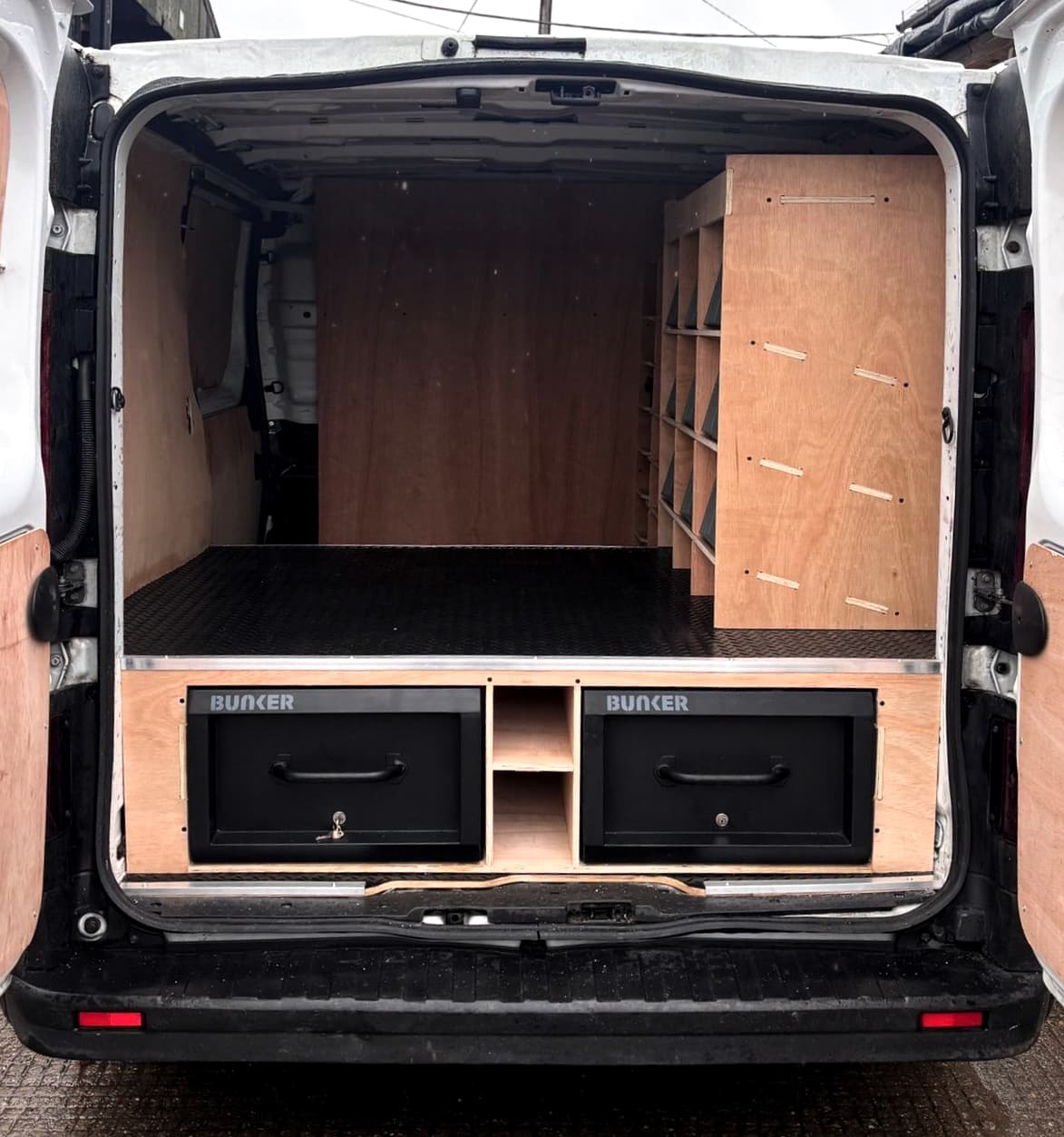
Standard ply — or birch plywood — is a high-quality structural wood panel made from multiple thin layers of birch veneer bonded together. It's strong, lightweight, and has a warm, natural appearance that looks clean and professional in any van.
It's the material we use on our Standard tier fit-outs, and it's the most popular choice among the tradespeople we work with. For the vast majority of trade use, standard ply is more than capable of handling daily demands.
What is hex phenolic plywood?
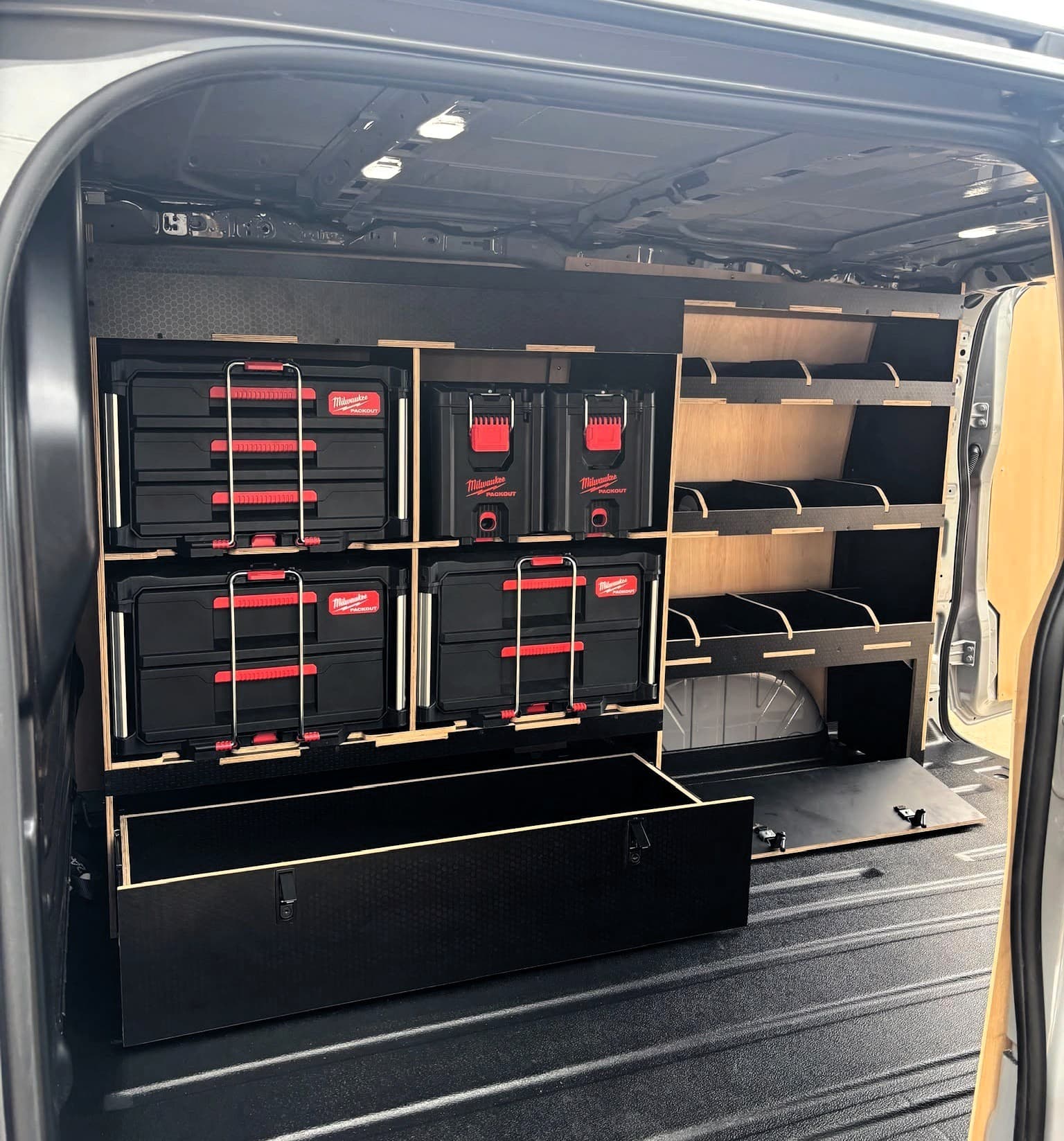
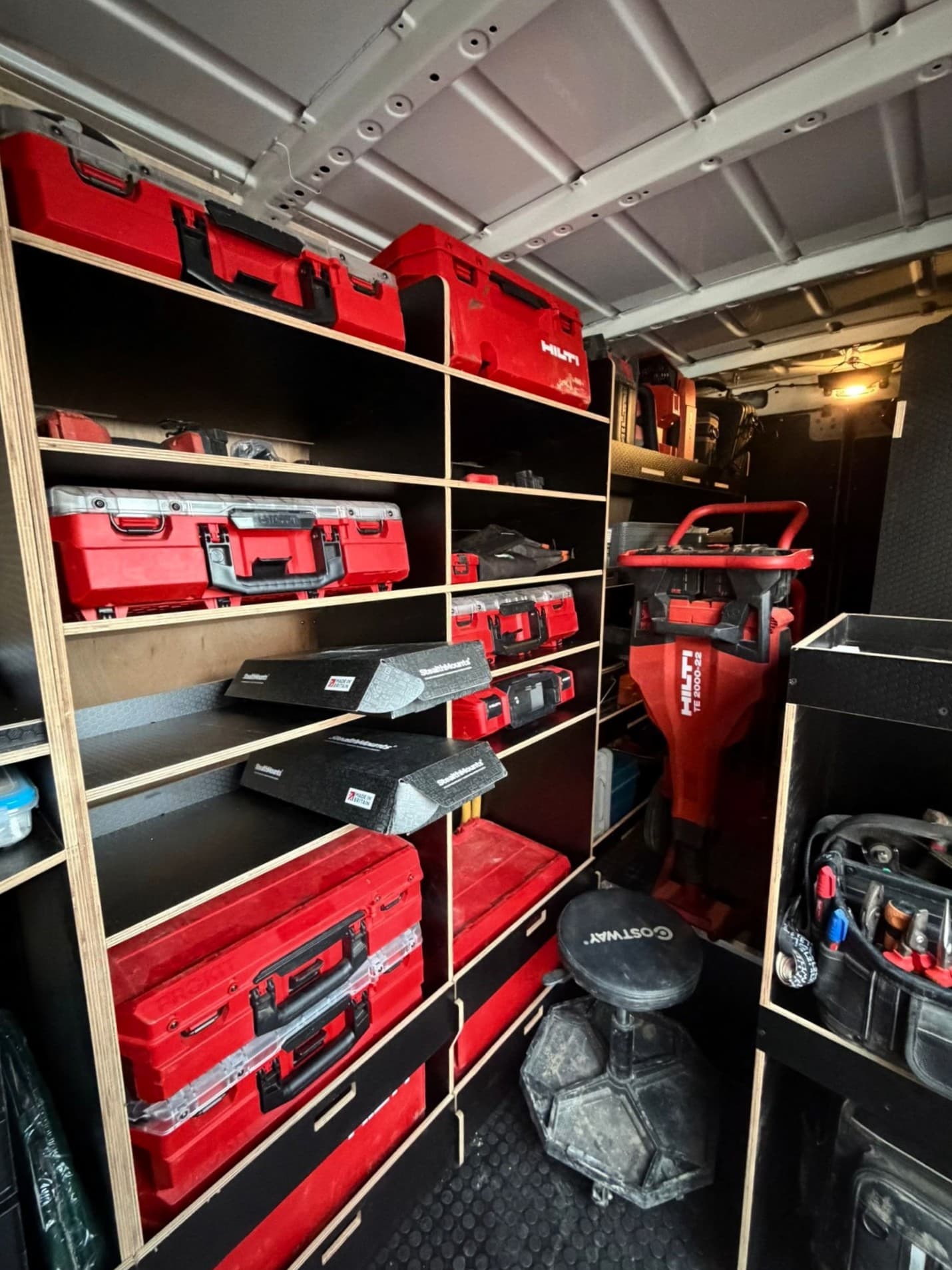
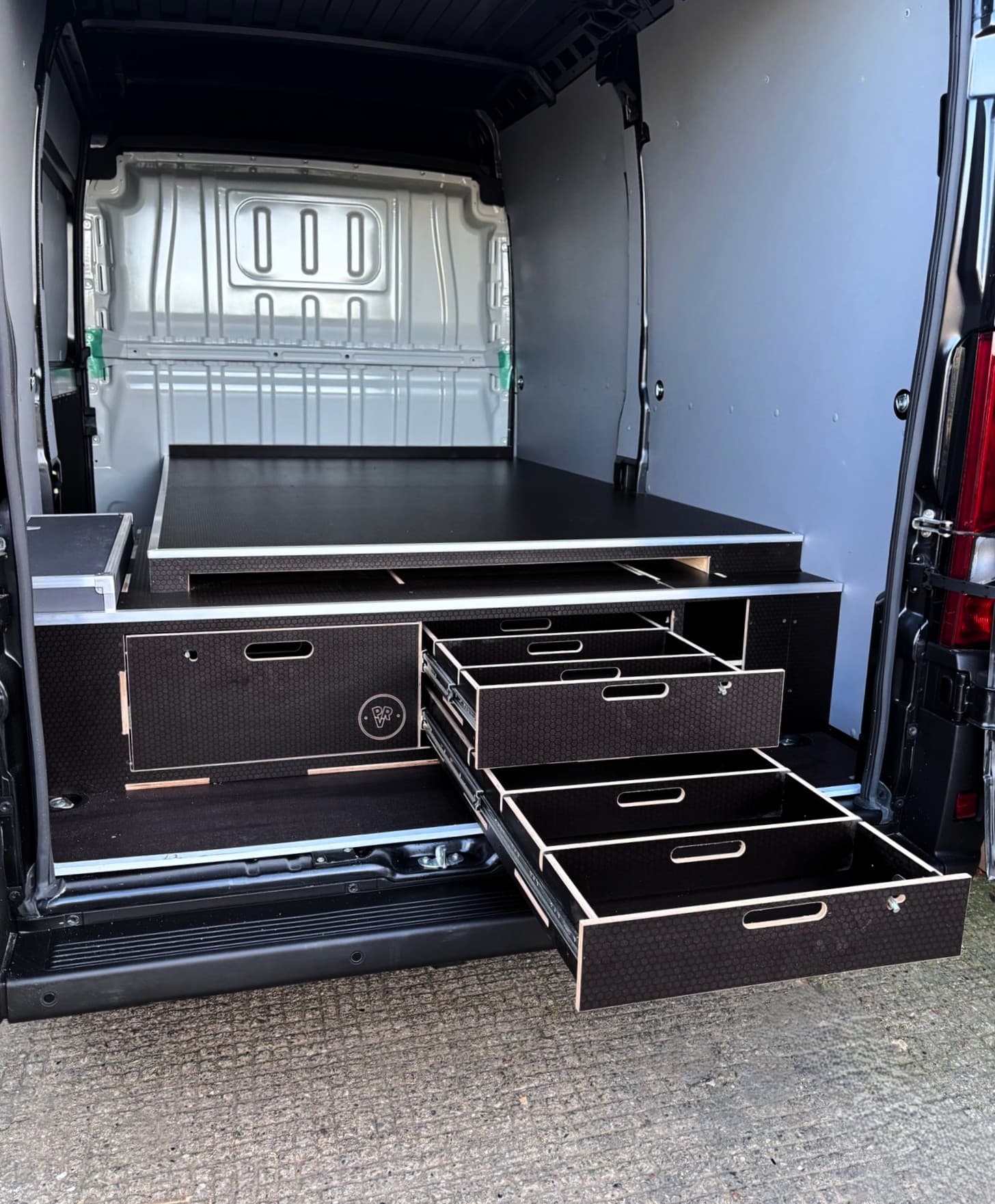
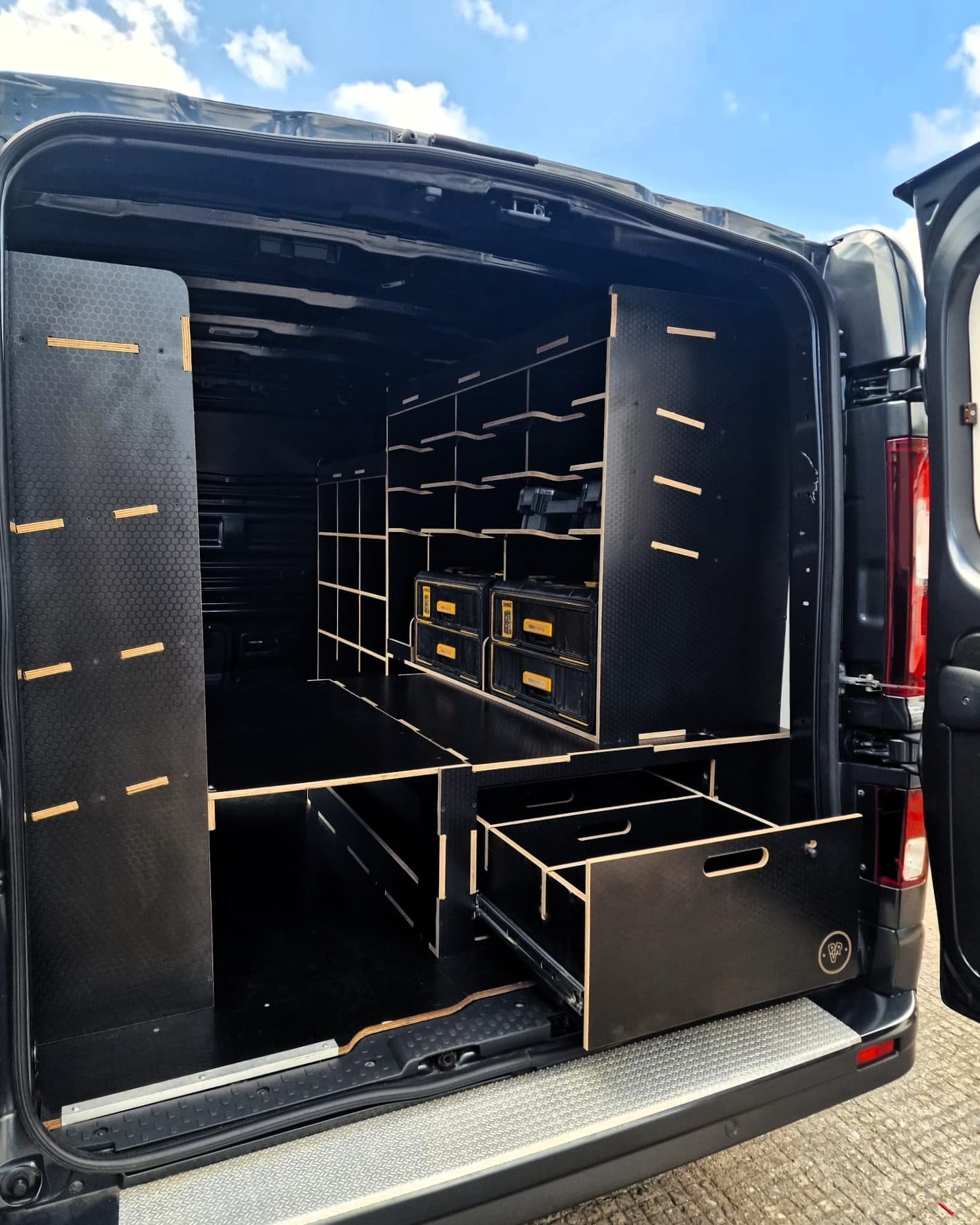
Hex phenolic plywood — often called hexaboard or hex ply — is standard plywood with a phenolic resin coating bonded to the surface. The coating gives it a distinctive dark, textured finish with a raised hexagonal pattern.
The phenolic coating makes the surface significantly harder and more resistant to:
- Moisture and spills
- Scuffs, scratches, and surface damage
- Heavy daily wear and impact
It's the material we use on our Pro tier fit-outs, and it's particularly popular with tradespeople who work in demanding environments or want a van interior that looks sharp for years.
How do they compare?
Durability
Hex phenolic has the edge here. The resin coating adds a protective layer that standard ply doesn't have, making it better suited to heavy daily use, wet conditions, and environments where the van interior takes a lot of punishment.
Standard ply is still very durable — we use quality birch ply in all our fit-outs — but over time in a demanding environment, hex phenolic will show less wear.
Appearance
This comes down to personal preference. Standard ply has a warm, natural wood finish that many tradespeople prefer — it looks handcrafted and professional. Hex phenolic has a darker, more industrial look that suits tradespeople who want a sleek, functional aesthetic.
Weight
They're broadly similar in weight. The phenolic coating adds a small amount, but it's not significant enough to affect your van's payload in any meaningful way.
Price
Standard ply is the more affordable option. Hex phenolic costs more due to the manufacturing process involved in applying the phenolic coating. At Ply Van Racking, our Pro tier (hex phenolic) is priced higher than our Standard tier (natural ply) to reflect this.
Which one is right for you?
Choose standard ply if:
- You want a clean, natural finish at a competitive price
- Your van is used in typical trade conditions
- You're fitting out a single van and budget is a consideration
Choose hex phenolic if:
- Your van is used in wet or particularly demanding conditions
- You want the toughest, longest-lasting finish available
- You're fitting out a fleet and want a consistent, professional look across multiple vehicles
- You take pride in a sharp, well-presented van interior
Both come with free fitting
Whichever material you choose, all our fit-outs include professional fitting at our Shrewsbury workshop. We serve tradespeople across the West Midlands and surrounding areas, and most jobs are completed within a week of booking.
If you're not sure which material is right for your van and your trade, book a free design consultation and we'll talk you through the options.
Tags
- materials
- hex phenolic
- plywood
- van racking