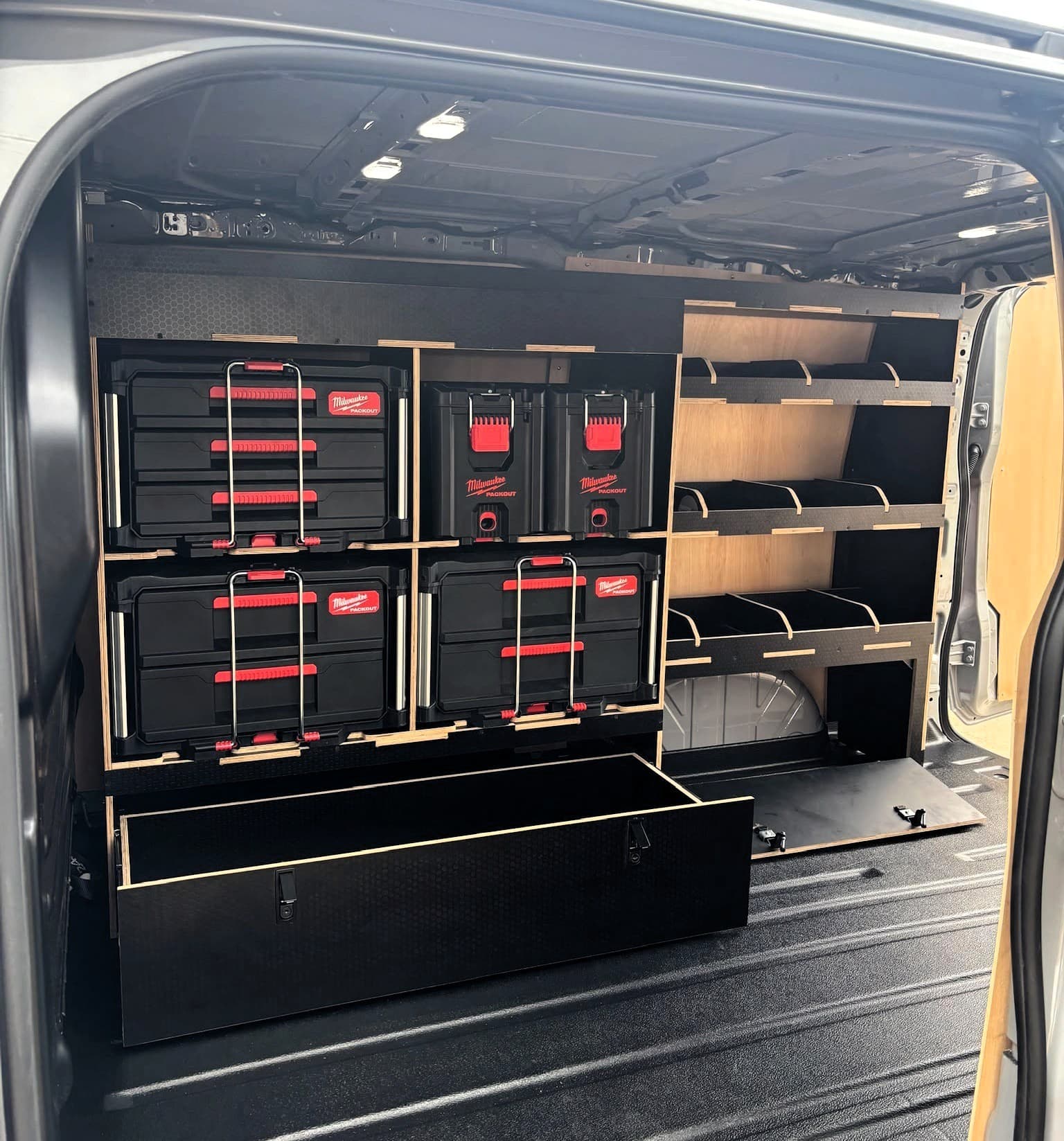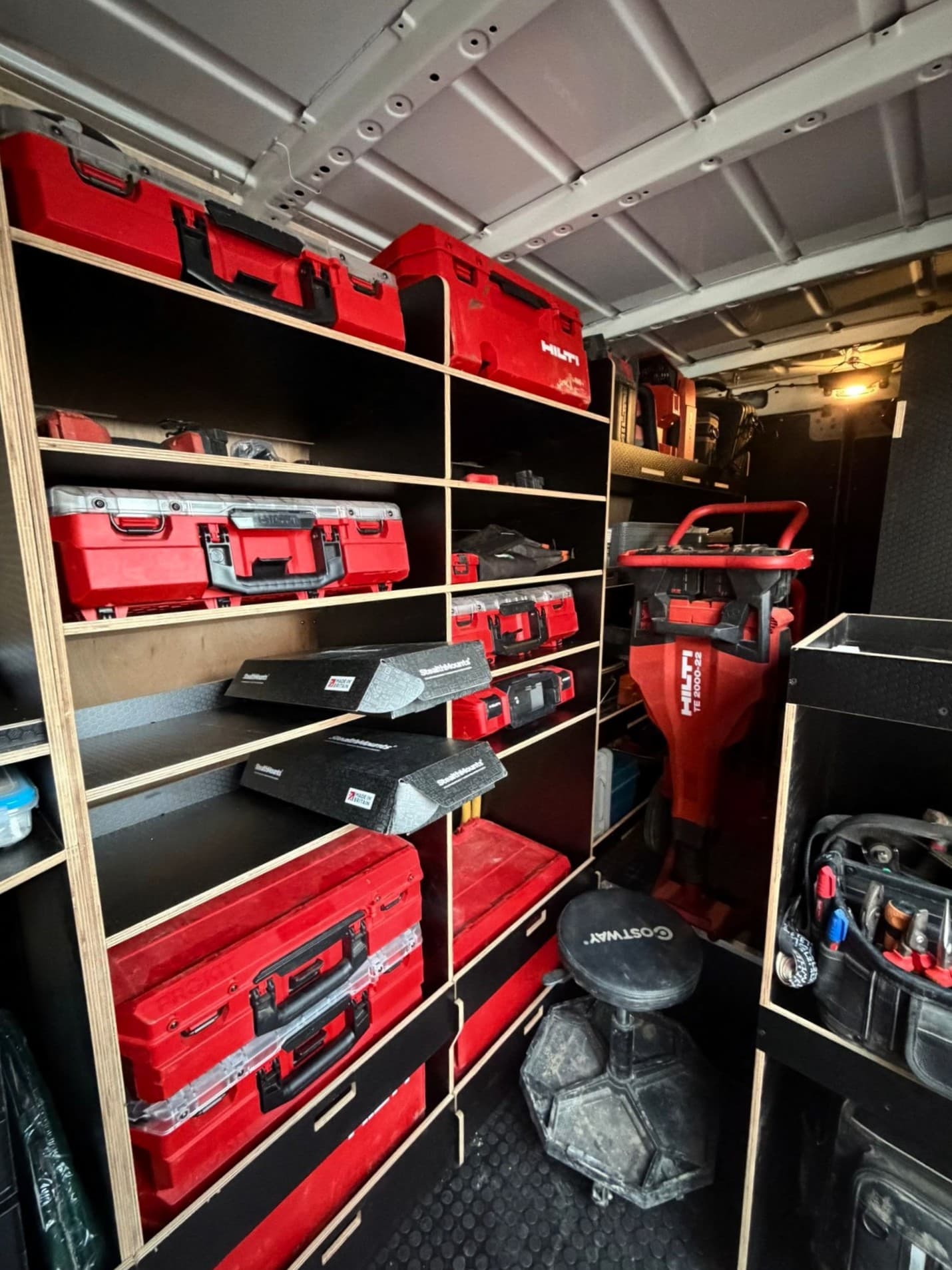
Ladders, pipe, conduit, timber, coving — almost every trade carries something too long to sit in a rack, and it's usually the load that causes the most grief. Here's how to carry it without damaging it, your van or yourself.
Almost every trade carries something too long to sit in a rack. Ladders, 3 metre lengths of pipe, conduit, timber, skirting, coving, ducting — whatever it is, it's usually the load that causes the most grief. It's what gets dropped on the way in, rolls into everything else on the way to site, and does the real damage when you have to stop hard. Carrying it properly isn't complicated, but it does need deciding rather than defaulting to whatever fits.
Loose is the problem, not long
An unrestrained load carries on at whatever speed you were doing until something stops it — a bulkhead, your racking, or the back of your seat. A 20kg extension ladder in a hard stop from 30mph doesn't hit like 20kg; it hits like several times that. That's why the DVSA standard is a restraint system capable of holding the full weight of the load forwards and half of it sideways and backwards, not just enough to stop it rattling.
It's also an offence. An insecure load falls under Regulation 100 of the Construction and Use Regulations, and it's a fine and points before you get anywhere near the insurance conversation that follows a claim. None of that is an argument for carrying less. It's an argument for the load having a fixed home rather than a space where it happens to fit.
Roof or inside — decide by what you carry, not by habit
A roof rack frees up the entire load bay and suits the ladder that comes off at every single job. The trade-offs are real, though: every trip out is a lift over your head, it costs you fuel and a chunk of height you'll remember the first time you meet a car park barrier, and it puts your kit on display. Ladders go missing off roofs constantly, so locking clamps aren't optional. Check the manufacturer's roof load limit too — it's lower than most people assume, and the rack itself counts towards it.
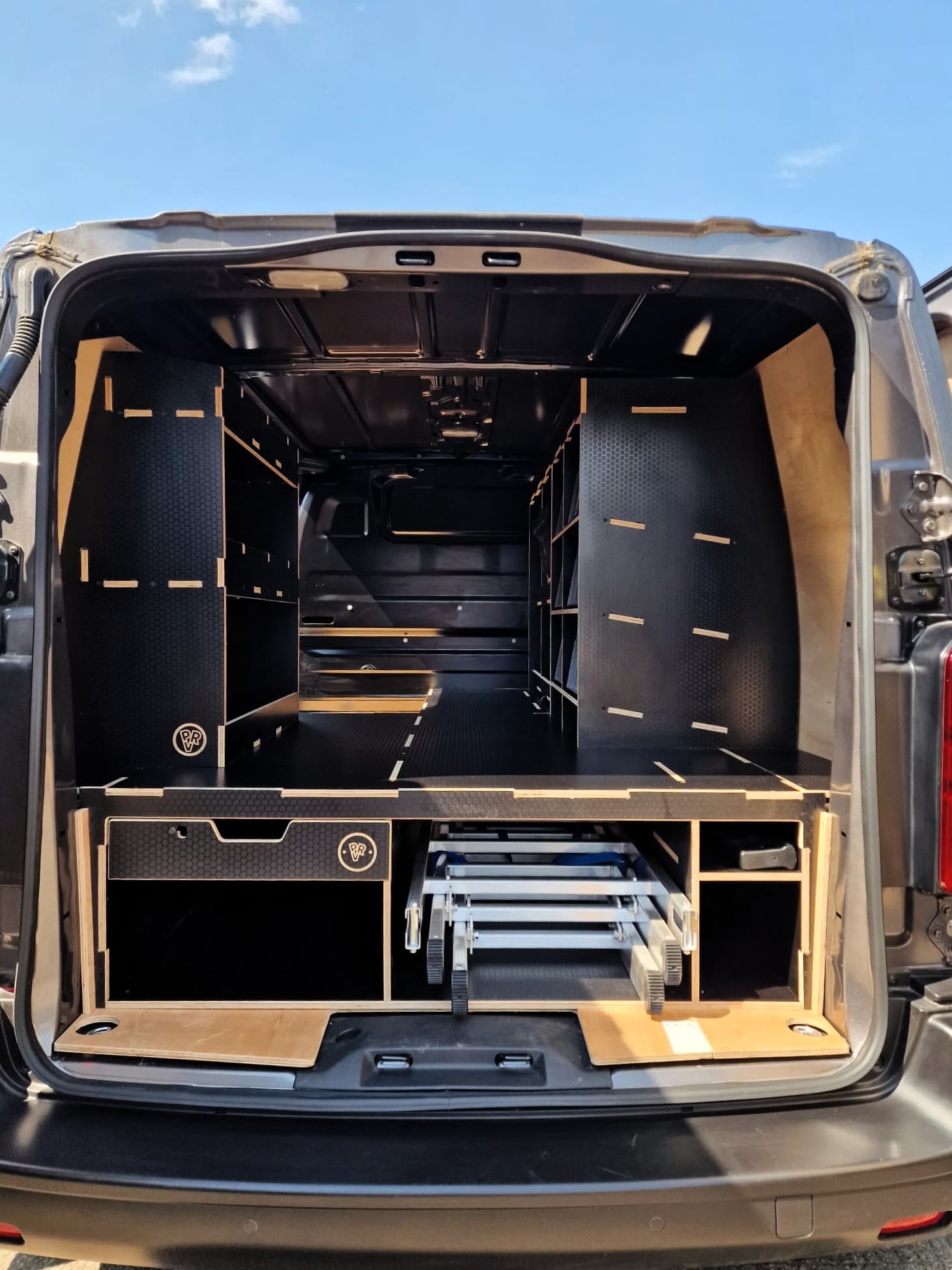
Inside is more secure, stays dry, keeps the ladder out of sight and out of the weather, and takes the daily lift out of the job. The catch is that it eats the load bay unless the carrying is designed in from the start, which is exactly what a fit-out with ladder storage designed in solves.
As a rough rule: if you're up and down ladders all day, put them on the roof with a drop-down or lockable clamp system that doesn't need two people. Pipe, timber and trim go inside, every time.
Give long materials one dedicated home
The worst setup is no setup — lengths lying loose on the floor, where they roll, kink, dent, scratch the lining and bury everything underneath them. Offcuts you meant to reuse come out crushed flat, so you buy again.
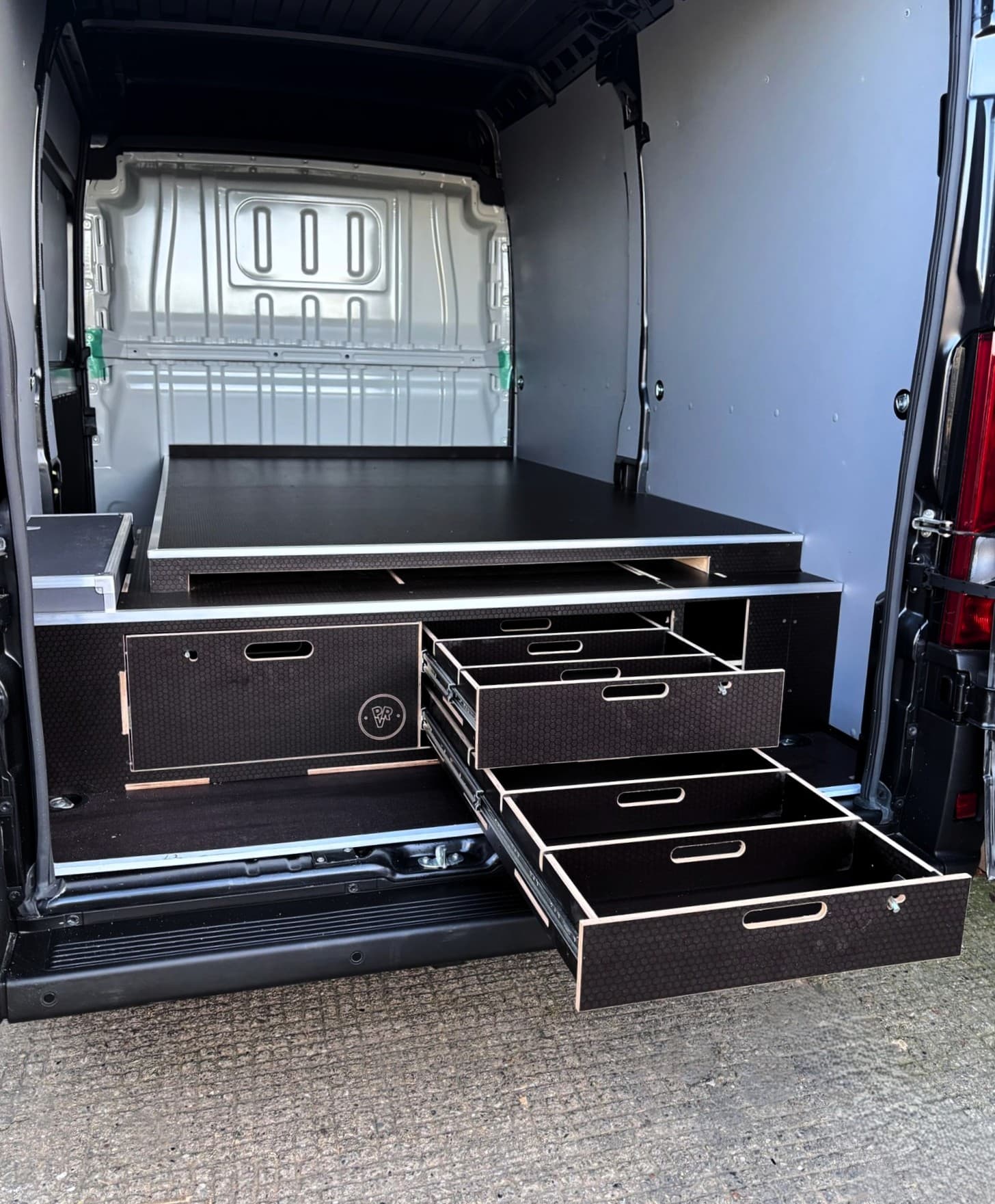
There are three placements that work, and most vans use more than one. A pipe tube or carrier running through the bulkhead into the cab void handles full 3 metre lengths without costing you any load space. A channel along the top of the racking does the same job for anything you need to reach quickly. And at floor level, a full-length underfloor drawer under a false floor is the neatest answer of the lot — long, lockable, out of sight, and it doesn't cost you a single millimetre of standing height.
Wherever it goes, load it from the door end so the weight sits over the rear axle rather than out past it, and cap the end so nothing can travel forward under braking.
Restraint that actually holds
Fix to something structural. Vans come with rated lashing points for a reason — use those, or anchor points bolted through the van's own load-rated mountings. Straps screwed into ply alone will pull out under load, and that's the failure that hurts.
Ratchet straps, not bungees. A bungee stops a ladder rattling; it does nothing to stop it moving when it matters. Two straps beat one, at both ends of the load rather than both in the middle. Clamps for ladders should lock and should clamp the ladder itself, not just trap it.
Then check them. Straps slacken as a load settles and as timber and pipe shift against each other, so a quick pull on each one before you set off is worth more than any amount of kit.
Set the van up around what you actually carry
Long loads stop being a problem the moment they've got somewhere proper to live. Take a look at our van racking and storage systems to see how pipe carriers, underfloor drawers and ladder storage build into a full fit-out, or book a free design consultation and we'll plan the van around the lengths you carry every day.
Tags
- ladder storage
- long material van storage
- van ladder rack
- pipe carrier
- load security