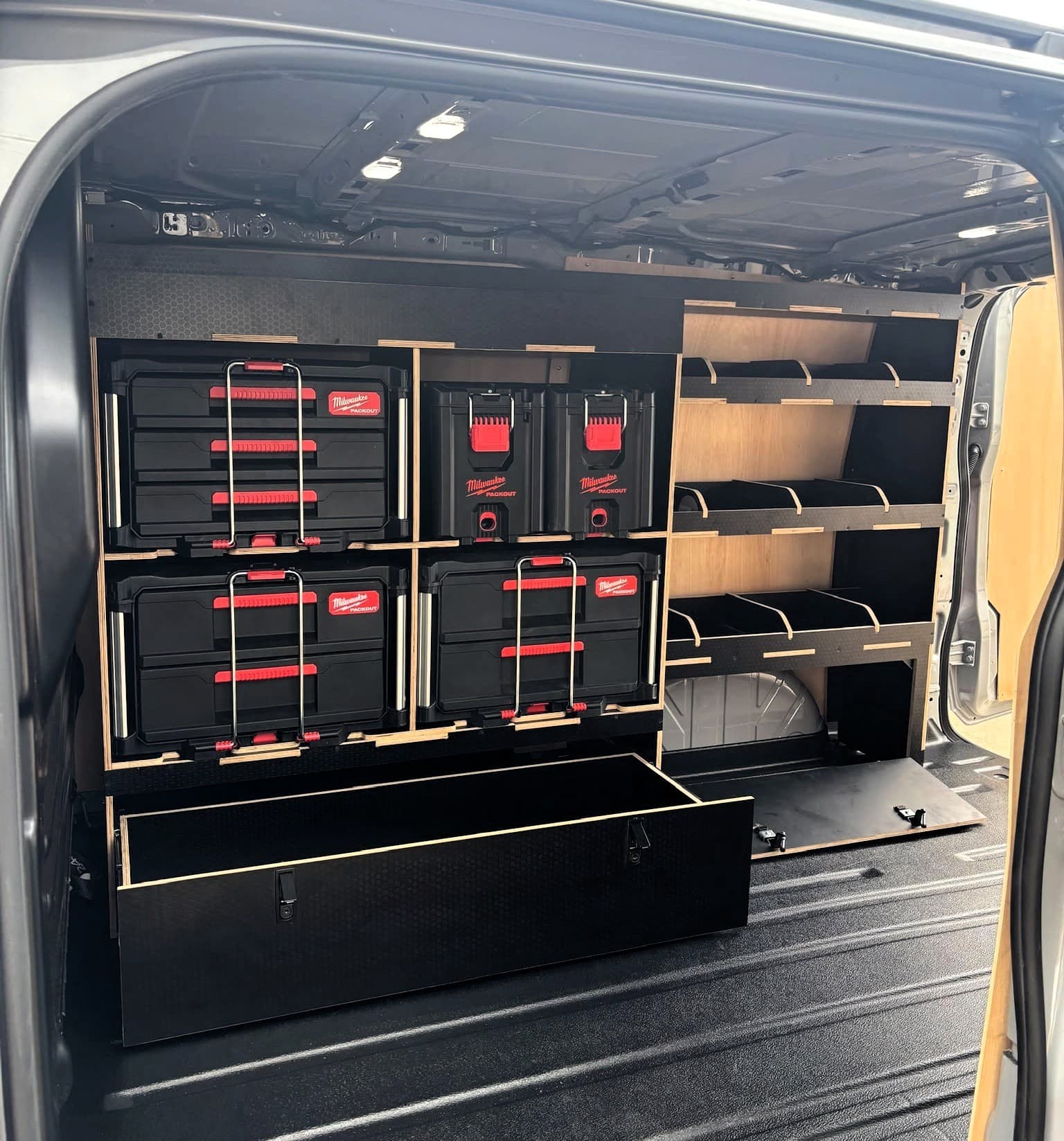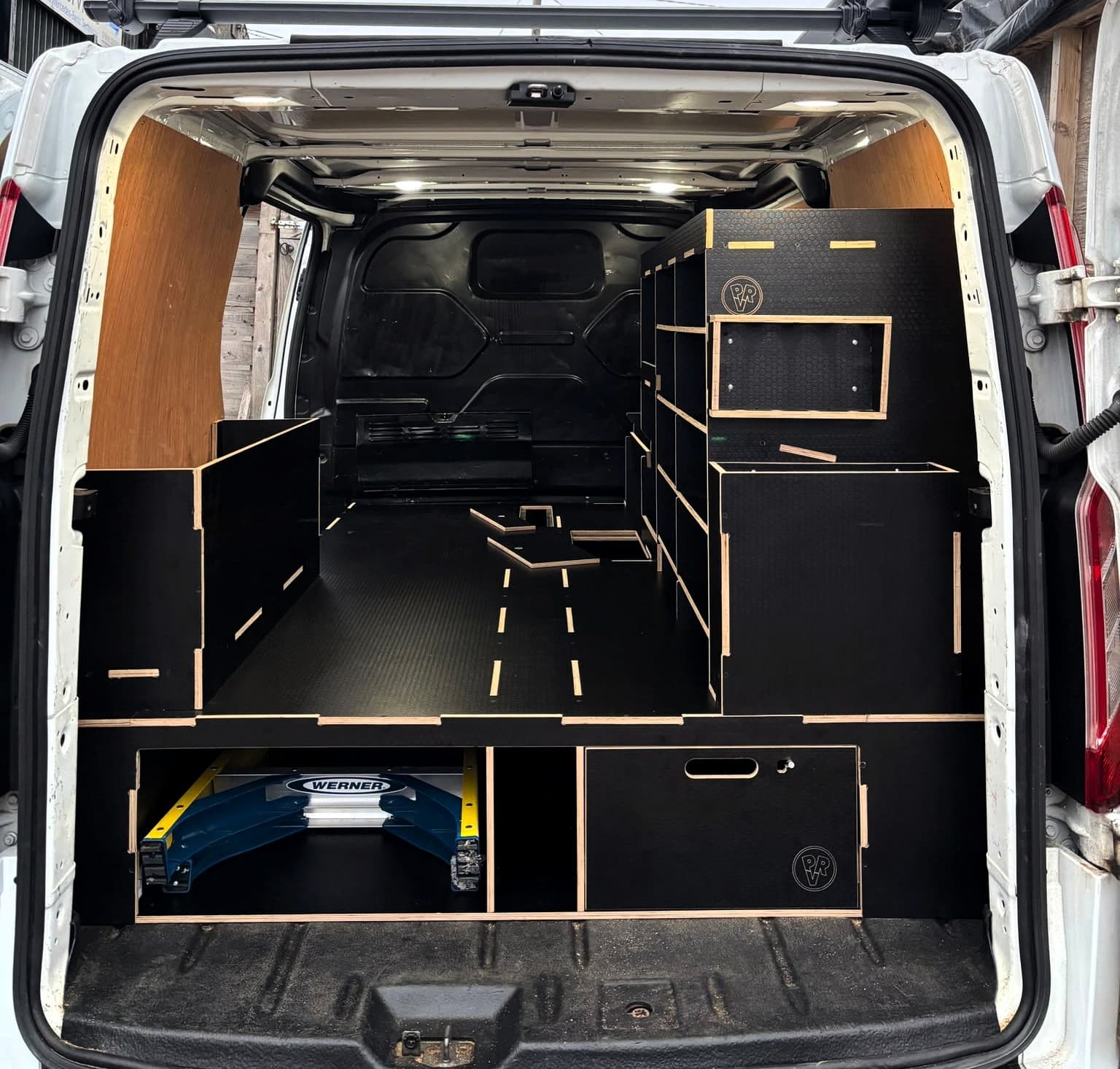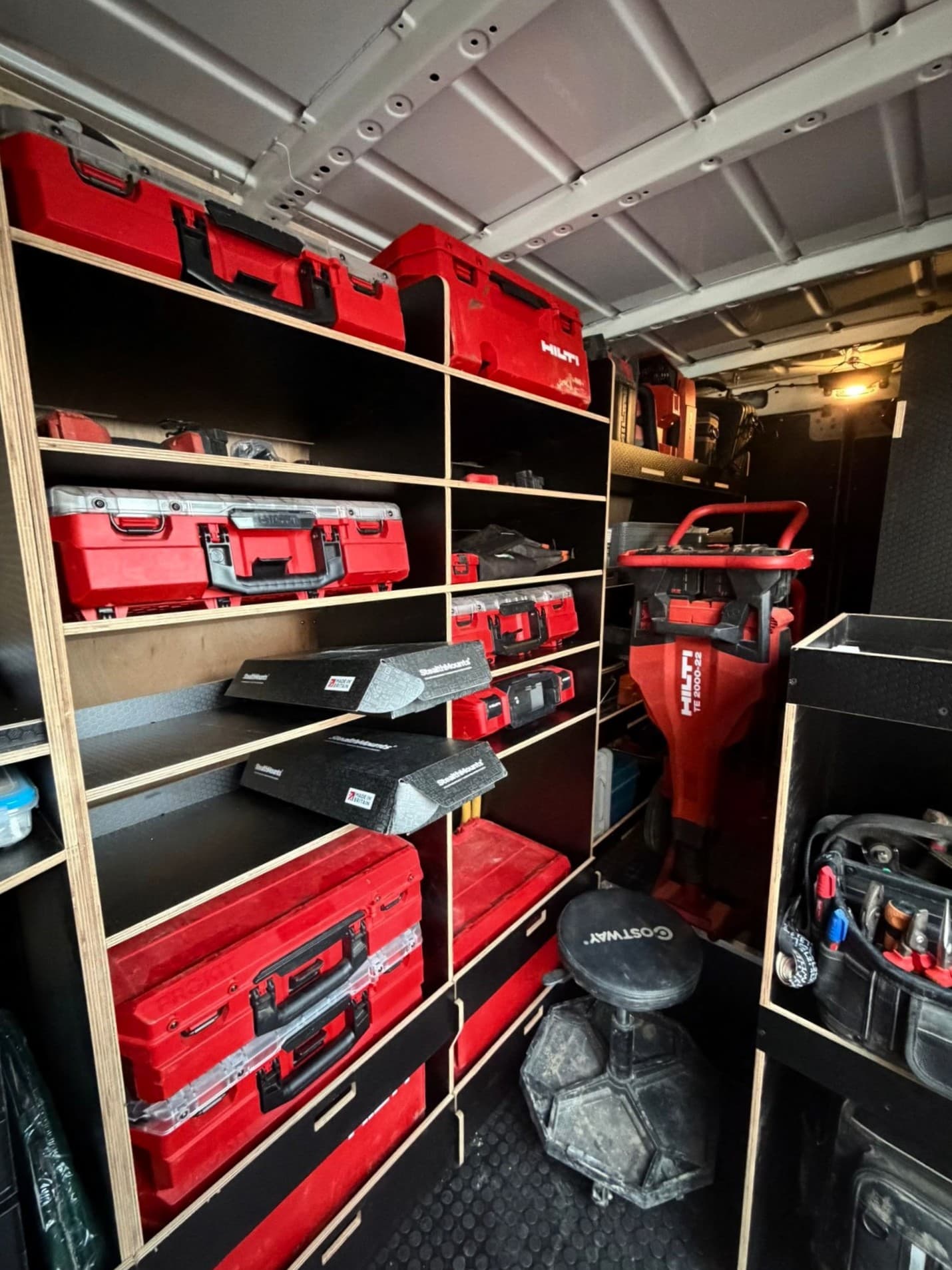
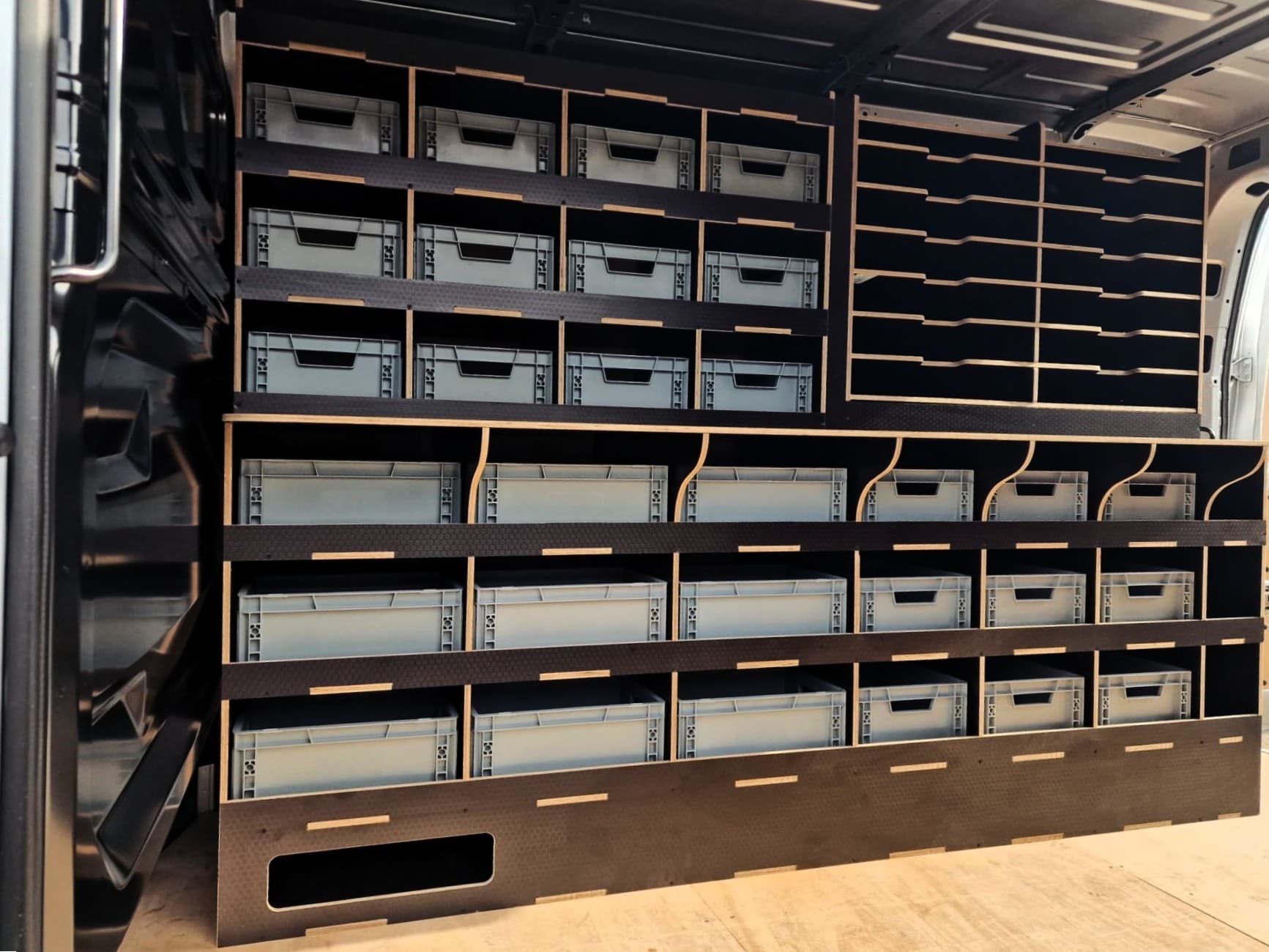
A fit-out is bought to make you money while you own the van — but it also changes what you get back when you sell it, trade it in or hand it back. Here's where that value actually sits.
Most tradespeople buy a fit-out for the years they're using the van, not the day they get rid of it. Fair enough — you rack a van so you can find a fitting in ten seconds and keep four grand of cordless kit out of sight, not to impress a dealer three years down the line. But every van leaves eventually, and by then the way it was fitted out has already decided a chunk of what you walk away with. Here's where that value actually sits, and where it doesn't.
The load area is the first place anyone looks
Open the back doors and you've told the buyer everything. Bare steel takes its first knock in week one, and after a few winters of wet boots, dropped tools and dragged materials you're looking at scraped paint, dented panels and rust creeping out of every scuff. None of that is fixable at trade-in. It just comes off the price.
A ply-lined floor and walls take that punishment instead of the van. When the lining eventually comes out, the panels underneath are the same as the day you picked it up — no gouges, no rust bloom, no ripples in the sidewalls. That's the difference between a van that looks like it's been worked and a van that looks like it's been wrecked, and it's worth real money on an appraisal sheet whether you're selling privately or standing in a dealer's yard.
On lease or contract hire, damage is charged by the panel
If the van's on contract hire, this matters more, not less. Return condition is assessed against the BVRLA fair wear and tear standard, and the load area is part of the inspection. Dents, scored floors, corrosion and holes in the panels all come back as chargeable damage, and those invoices land months after you've handed the keys over.
Two things are worth doing early. Check what your agreement says about fit-outs before anything gets fitted — most are fine with racking, but many expect the van returned to standard, so the setup needs to come out cleanly. And line it. A lining kit costs a fraction of a damage bill, and it's the cheapest way to guarantee the load area passes inspection at the end of a three or four year term.
A fitted van sells to the person most likely to buy it
Be realistic about who's buying. Push a van through auction or straight to a dealer and racking is roughly neutral — they price the vehicle, not your shelving. Sell privately, though, and your buyer is almost certainly another tradesperson, and a van they can load up and work out of on day one is worth paying over the odds for. They're not just buying a van; they're skipping a fit-out and the week of downtime that comes with it.
That works best when the setup is sound and sensibly laid out rather than built around one very specific way of working. Solid ply, tidy shelving, secure storage and a clear load space read as an asset to almost any trade. A one-off rig with everything cut to suit a single job type narrows your buyers considerably. And if a buyer doesn't want it, a properly fitted system unbolts and comes out — which is exactly why how it's fixed in matters so much.
How it's fitted decides whether it adds or subtracts
Bad fitting turns a fit-out into a liability. Sheet-metal screws driven straight through the body leave a row of holes and rust trails that no buyer misses, and no dealer ignores. Interior-grade ply or MDF swells, delaminates and traps water against the panels, which is how you end up with corrosion under something you fitted to prevent it.
Fitted properly it's the opposite. Marine-grade or phenolic-faced ply with sealed edges, fixed through structural rivnuts into the van's load-rated mounting points, will outlast the vehicle and come out without leaving a mark. That's a fit-out you can hand over with the van, or strip out and hand the van back clean. Either way you keep the value instead of paying for it twice.
Set the van up so it pays you twice
A good fit-out earns its keep every day you own the van — and then again on the day you sell it, in a load area that's still straight, a lease inspection that passes, and a buyer who can see exactly what they're getting. A cheap one costs you at both ends. Take a look at our van racking and ply lining systems to find a setup built for your trade, or book a free design consultation and we'll plan one around the way you work — and the day you move the van on.
Tags
- van resale value
- van fit-out
- ply lining
- lease return
- van racking