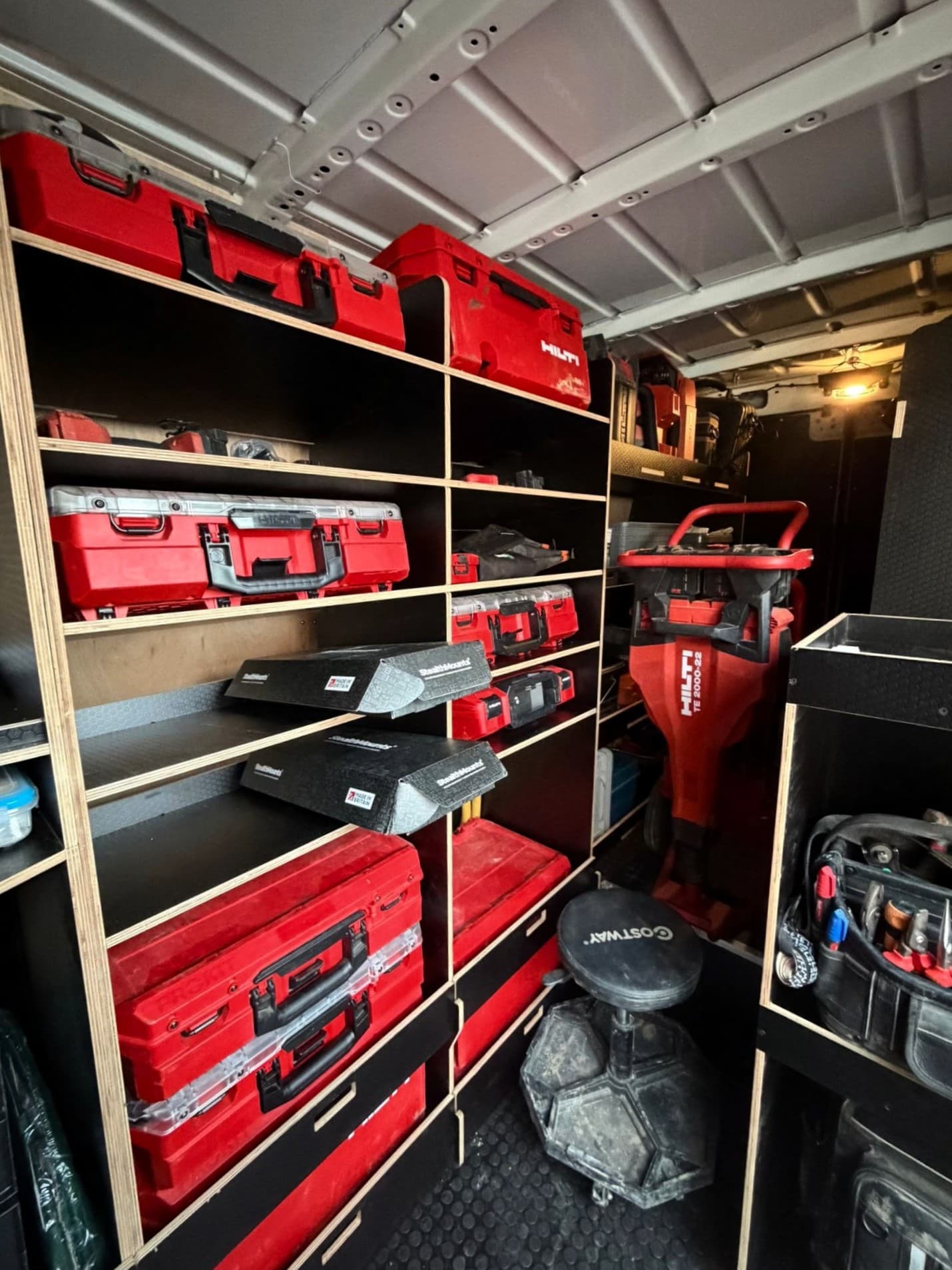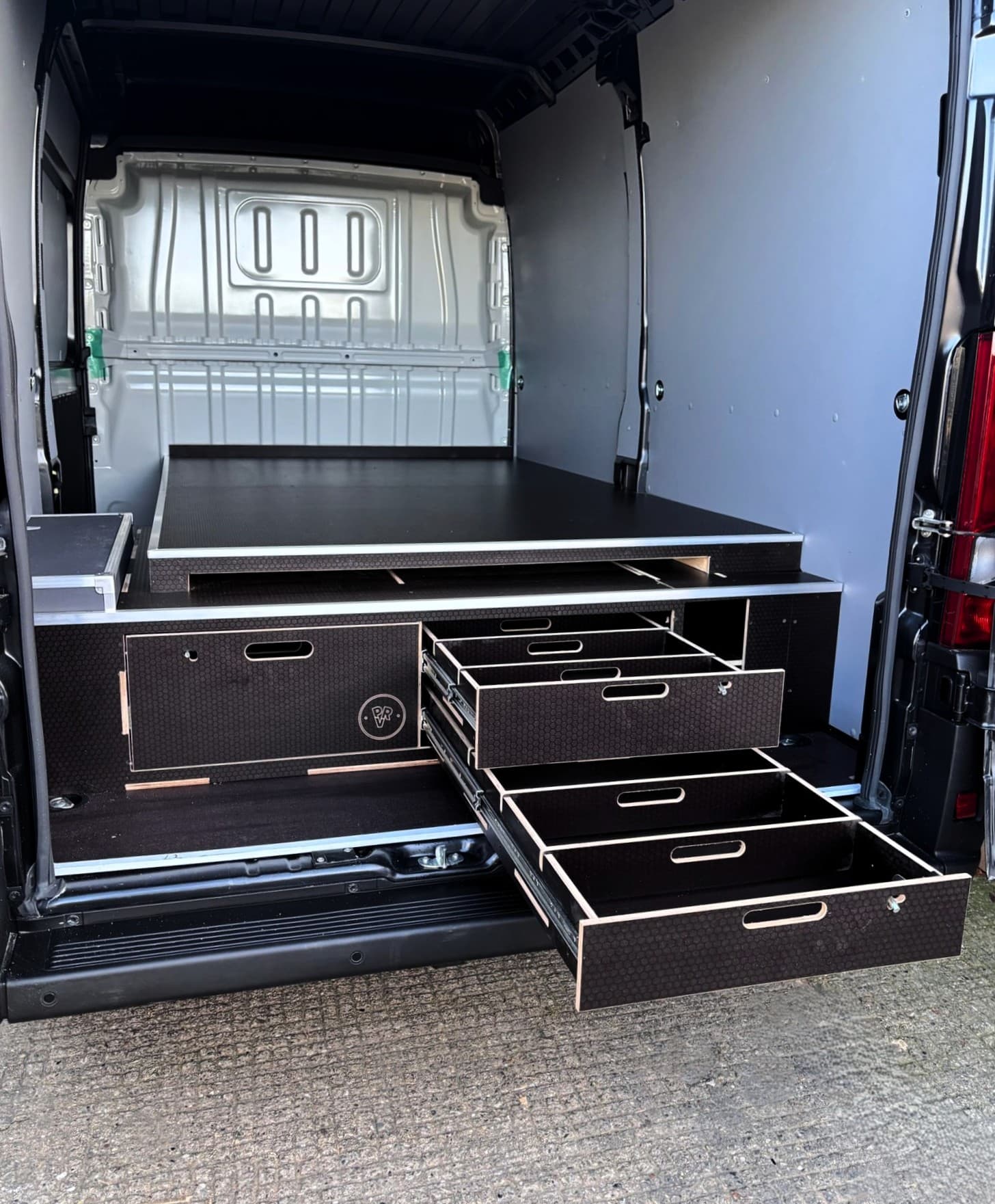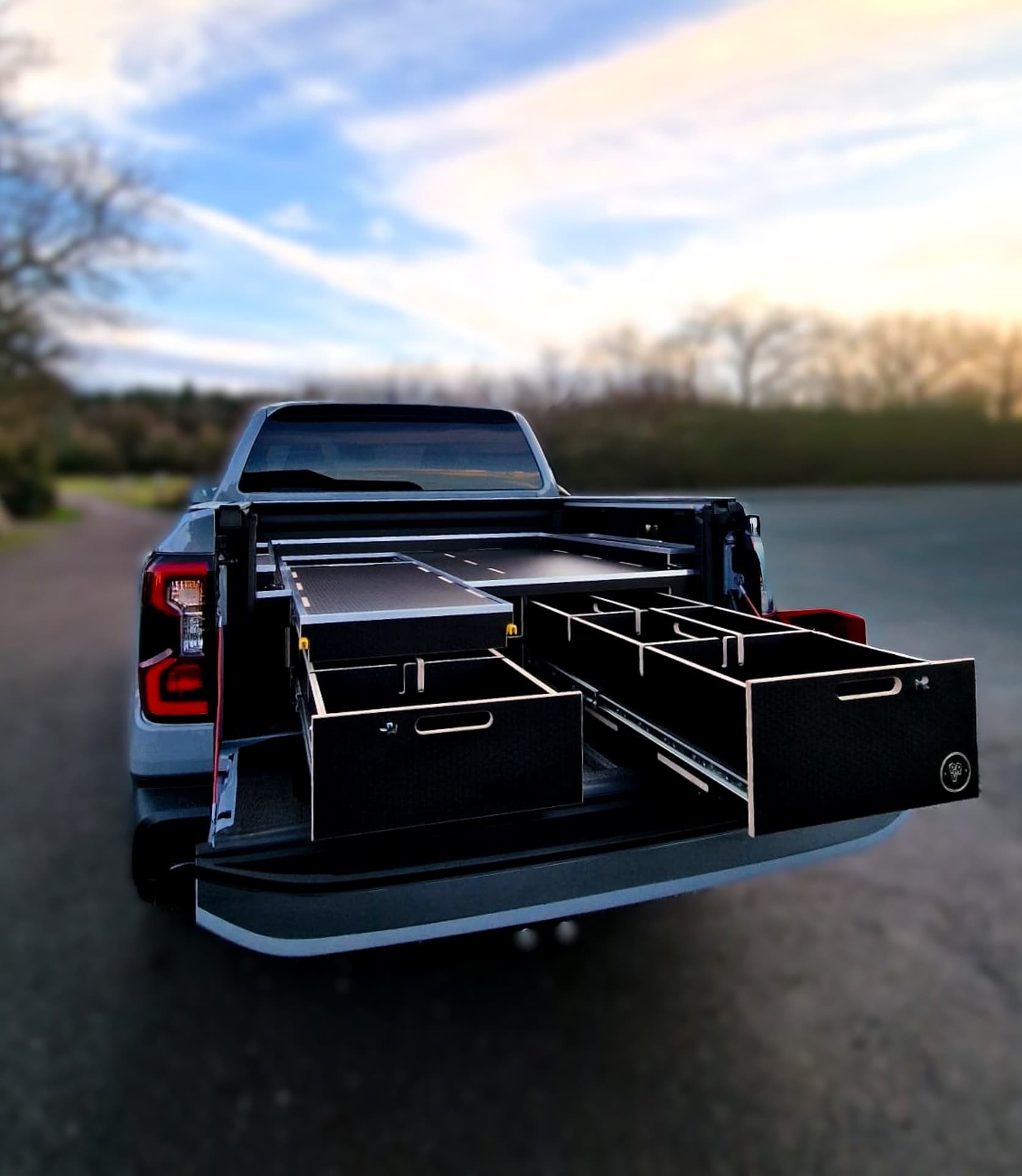
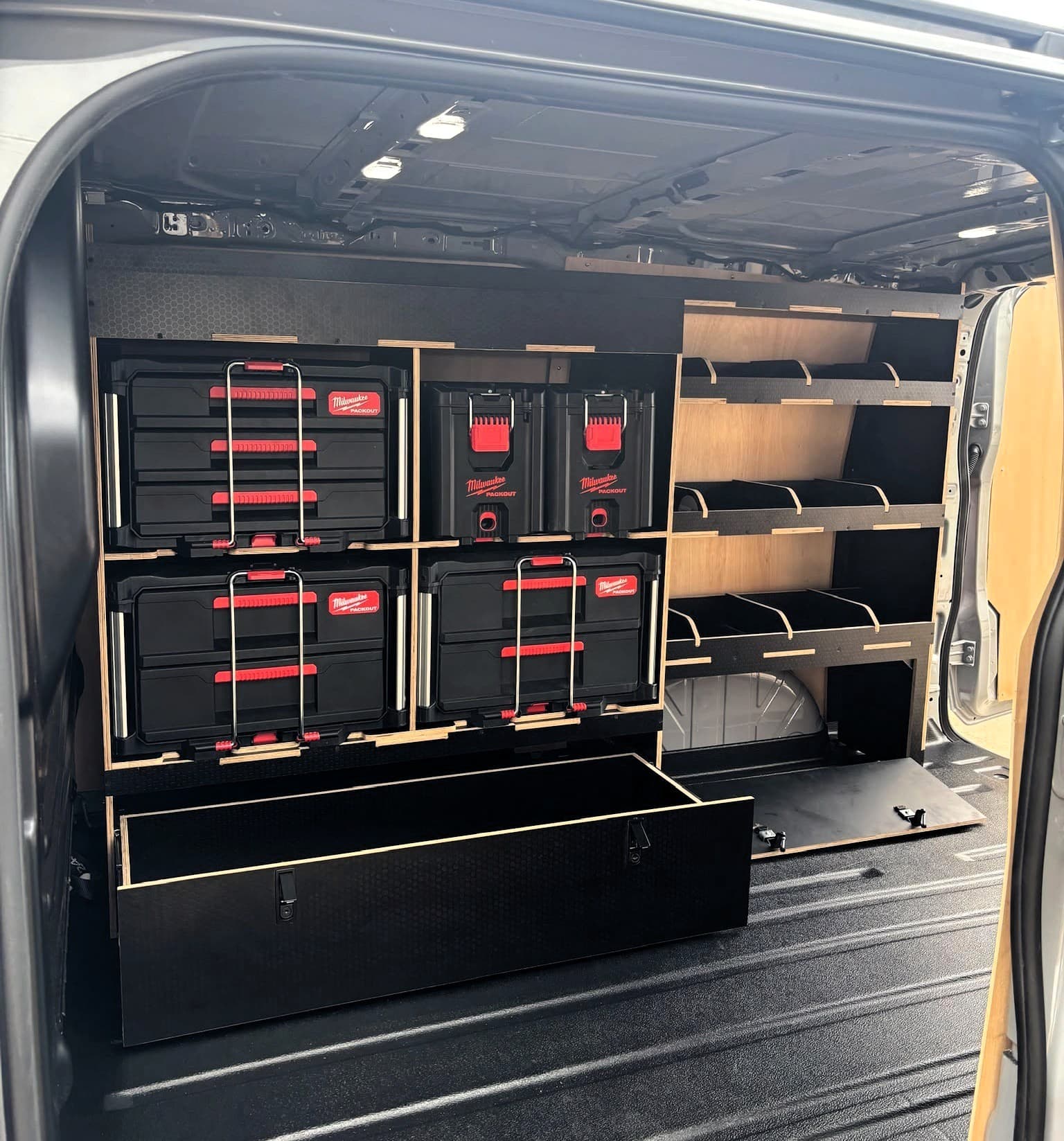
No depot to go back to, nobody to send for the part you forgot, and every minute you lose comes straight off your own day rate. Here's what that means for how the van should be laid out.
Working for yourself changes what a van has to do. There's no depot to call in at, no stores with a shelf of spares, and nobody to send for the fitting you didn't know you were short of. When something's missing, you go and get it — and the job stops while you do.
That's the difference worth designing around. A van on a firm's fleet can get away with being average, because there's a system behind it picking up the slack. A sole trader's van is the system.
Your van is the depot
Everything you hold is held in the van. That makes two decisions matter more for you than for anyone else: what you carry, and whether you can see it.
The what is about range, not volume. You're not trying to fit a merchant in the back — you're trying to make sure the twenty or thirty items that routinely stop a job are always on board. Fixings in the sizes you actually use, the common fittings, sealant, tape, blades, the adaptor nobody ever has.
The whether-you-can-see-it is what makes it work. Set a known level for each of those lines, keep them one-per-compartment in shallow drawers or wire-fronted shelves, and a glance tells you what to top up. Without that you're guessing, and guessing means either a van full of duplicates or a trip to the merchant at ten past nine.
Every job is a one-person lift
There's no mate on the other end. That rules out a lot of setups that look fine in a photo.
Heavy kit belongs at floor level on pull-out drawers or trays, so it slides out to you rather than being lifted down at arm's length. Anything you take out at every job wants to be within reach of the doors, at waist height, in one movement. The top shelves are for light, bulky, occasional things — not for the item you handle fifteen times a week.
This isn't a comfort argument. A back injury doesn't cost you a few uncomfortable days, it closes the business until it heals. Designing the van so you never have to make an awkward lift is cheap insurance against the one risk you genuinely cannot cover.
There's no second van and no spare set of tools
If a firm has a van broken into, they move someone into another vehicle and carry on. If it happens to you, the week stops.
So the security side is worth more to you than to anyone else. A lined load area with everything out of sight from the windows, tools in fixed positions rather than visible on the floor, and a lockable compartment for the expensive items — the laser, the test gear, the batteries. None of it makes a van impossible to break into. It does make yours a worse prospect than the one parked behind it, and it limits what can be cleared in sixty seconds.
While you're at it, keep a short written list of what's in the van with serial numbers somewhere that isn't in the van. It turns an insurance claim from an argument into a form.
The lost minutes come straight off your rate
When you're employed, the time wasted looking for things is absorbed by somebody else. Self-employed, it's taken directly out of what you earn — and it's never charged to the customer.
Twenty minutes a day of hunting, shifting and reloading is around two working weeks a year. For a sole trader that's two weeks you either work for nothing or don't bill at all, and it's the clearest argument there is for a layout where everything has one fixed home and nothing is stored behind anything else.
Set the van up around how you actually work
You're the labourer, the storeman and the one doing the quoting, so the van has to carry its share. Take a look at our van racking and storage systems to find a layout built around your trade, or book a free design consultation and we'll plan one around the jobs you do and the kit you carry.
Tags
- sole trader
- van racking
- sole trader van setup
- tool storage
- self employed tradesman