Breakers, cut-off saws, compaction plates and a van full of kit that's filthy by ten in the morning. Groundworks is harder on a van than almost any trade — here's the setup that copes with it.
Groundworks is harder on a van than almost any trade. The kit is heavy, most of it is filthy by ten in the morning, and the items that cost the most — breakers, cut-off saws, lasers — are the ones most likely to get damaged or walk off a site.
Plenty of standard racking is designed around a van full of hand tools and fixings. It isn't designed around a 30kg breaker, a wacker plate and a pair of boots that have been in a trench since Monday. The setup that works for groundworks is a different shape, and it's worth knowing what it has to do before you spec one.
Design around the weight, not the volume
Groundworks vans run heavy, and a lot of them run closer to their plated weight than the driver realises. That makes two things matter more than how much you can physically fit in.
The first is where the weight sits. Breakers, plates, fuel, road pins and bagged material want to be low and over the rear axle, not stacked high or hanging out behind it. Get that wrong and the van steers badly, stops badly and eats rear tyres.
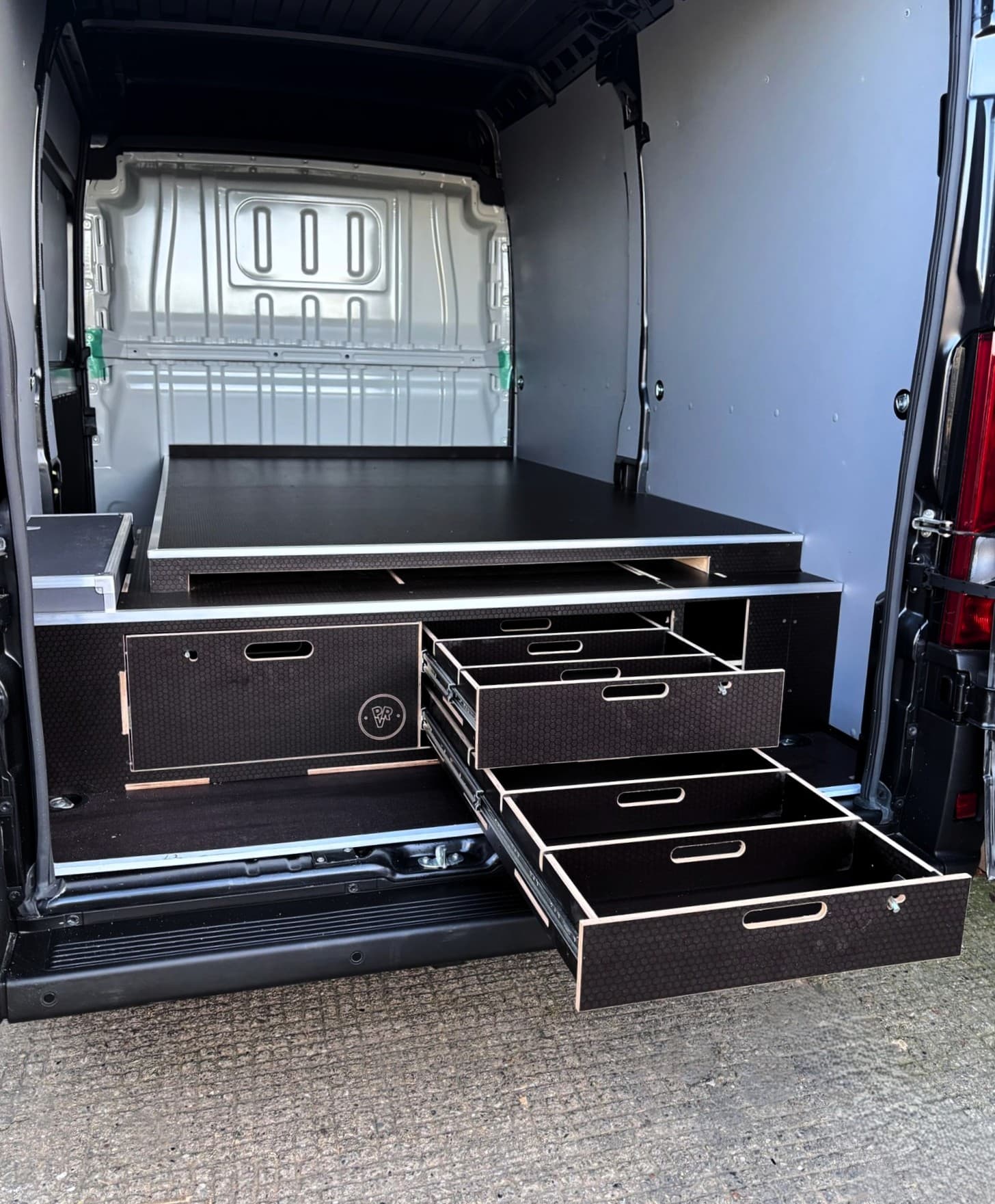
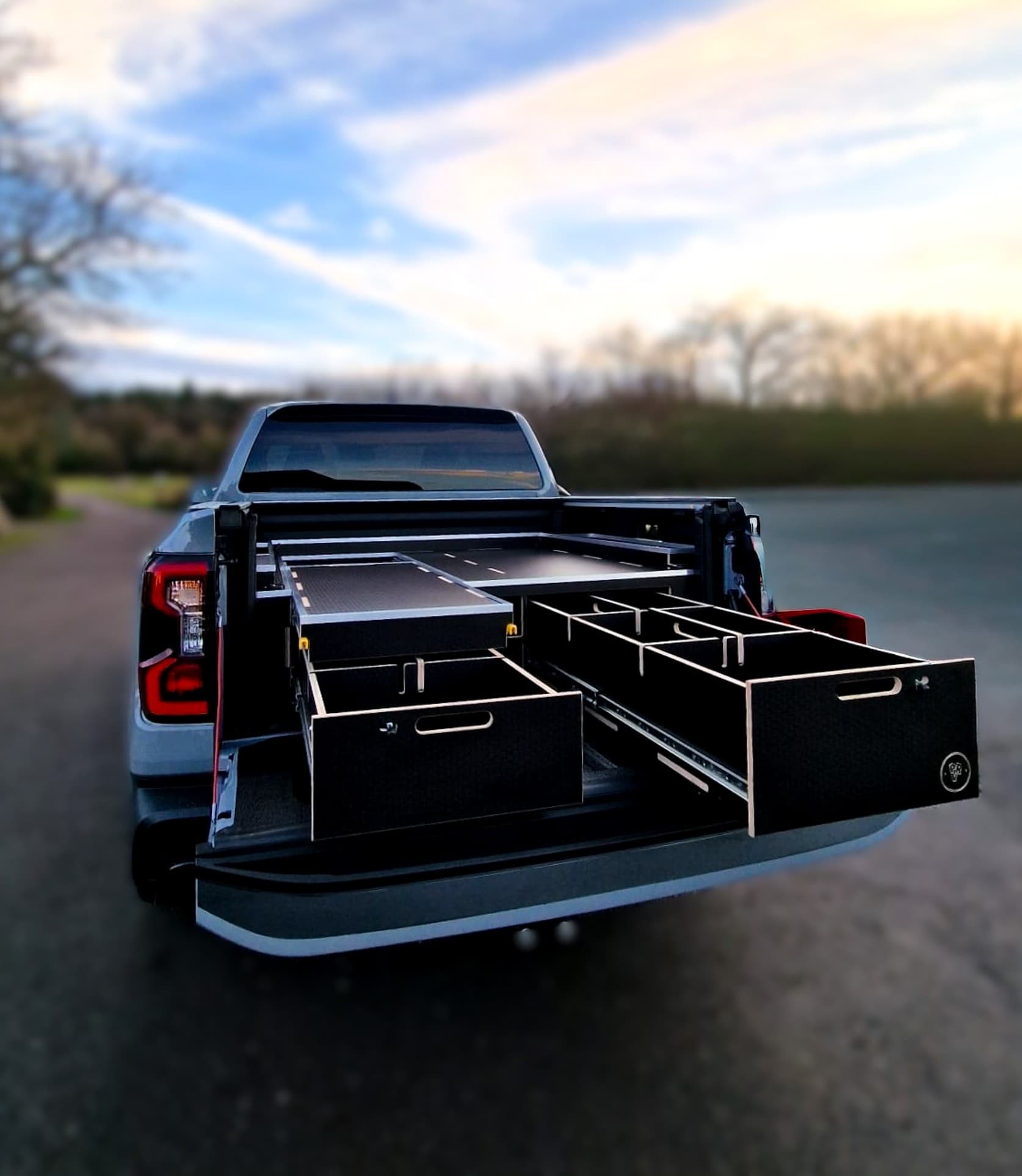
The second is how it gets in and out. Nothing heavy should live above waist height — that's how backs and shoulders go. A floor-level compartment or a heavy-duty pull-out drawer means the breaker slides out to you rather than being lifted down and dragged. Put it on load-rated runners, because a standard drawer runner will not survive a 30kg tool being pulled out twice a day for two years.
Wet and dirty kit can't share space with clean kit
This is the one that's specific to your trade. Half your load is mud, water and grit by mid-morning, and the other half — lasers, batteries, chargers, paperwork — has to stay dry and clean.
The answer is separating them properly rather than hoping. A hoseable, sealed section at floor level for shovels, rakes, boots, muddy PPE and drainage fittings, with a solid bulkhead or panel between it and the shelved kit. Keep it on materials that cope: hex phenolic and quality ply take wet loading and wipe down, where cheaper board swells at the edges and starts delaminating in a single winter.
Ventilation is worth designing in too. A sealed van full of wet gear stays wet, and permanently damp kit is how you lose tools to rust and a van to that smell nobody can get rid of.
Consumables and fuel are where the day gets lost
Groundworks eats consumables. Points and chisels for the breaker, cut-off discs, blades, plate oil, two-stroke, string line, spray, membrane, ducting tape. None of it is expensive on its own, and all of it stops the job when it's missing.
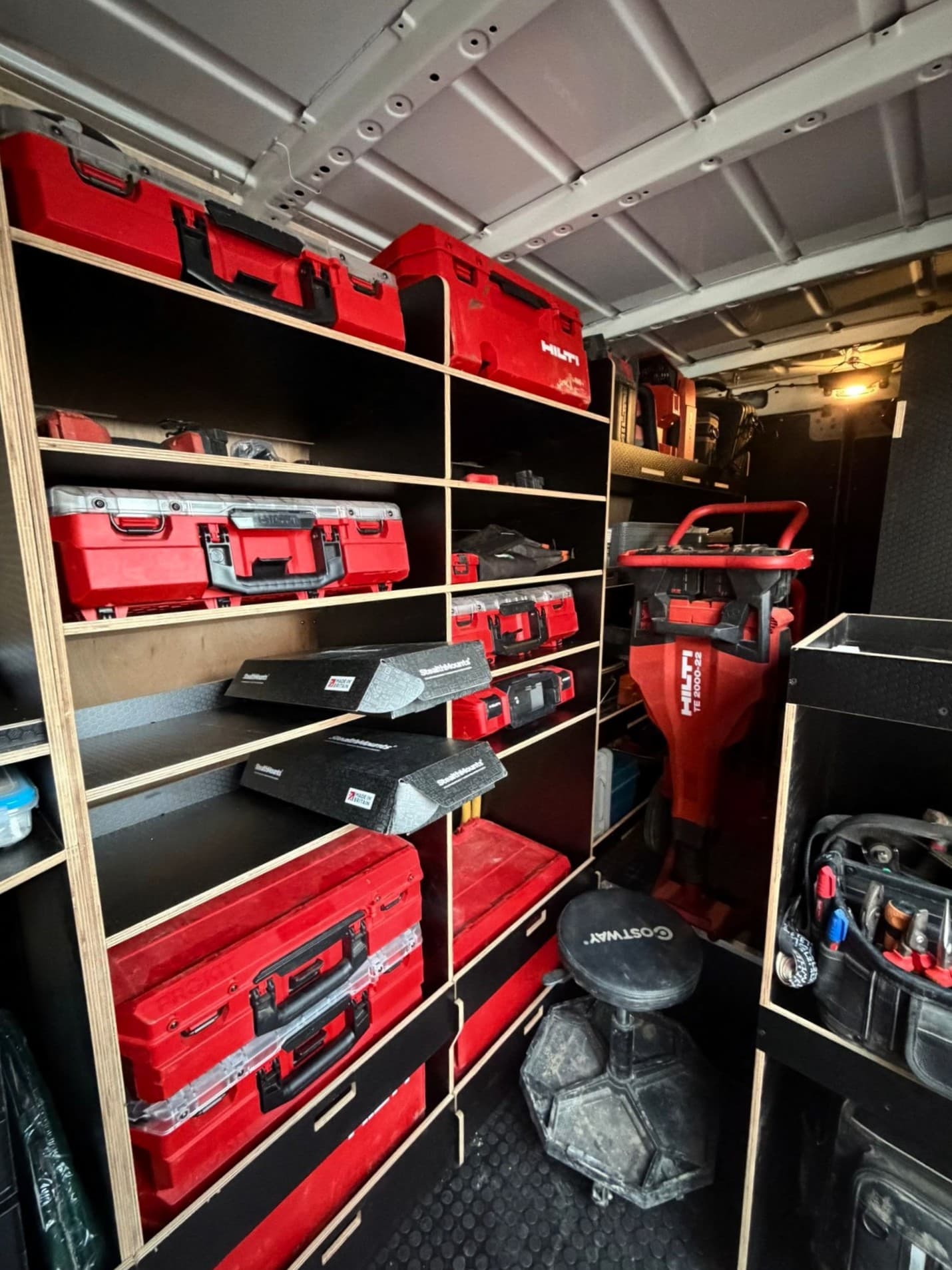
Store consumables in shallow drawers or wire-fronted shelves where you can see what's left, one type per compartment. The point isn't tidiness — it's knowing on a Friday afternoon that you're down to two discs, rather than finding out mid-cut on a Tuesday.
Fuel needs its own answer. Upright, in a proper sealed container, secured so it cannot move, in a vented compartment away from anything that gets hot — and it's worth checking what you're permitted to carry and in what container rather than assuming, because the rules are stricter than most people expect.
Safety gear has to be findable, not just present
Every groundworks van carries the PPE. The question is whether you can put your hands on it in ten seconds when an HSE inspector or a site manager asks.
Give it a fixed, obvious home near the doors: spare hi-vis, gloves, ear defenders, eye protection and RPE, plus the first aid kit and spill kit. Dust suppression gear counts here as well — the water bottle and the on-tool extraction only get used when they're to hand, and silica dust is the part of this trade that catches up with people twenty years later.
Buried under a pile of wet kit, none of it is much use to anybody.
Set the van up around the way groundworks actually runs
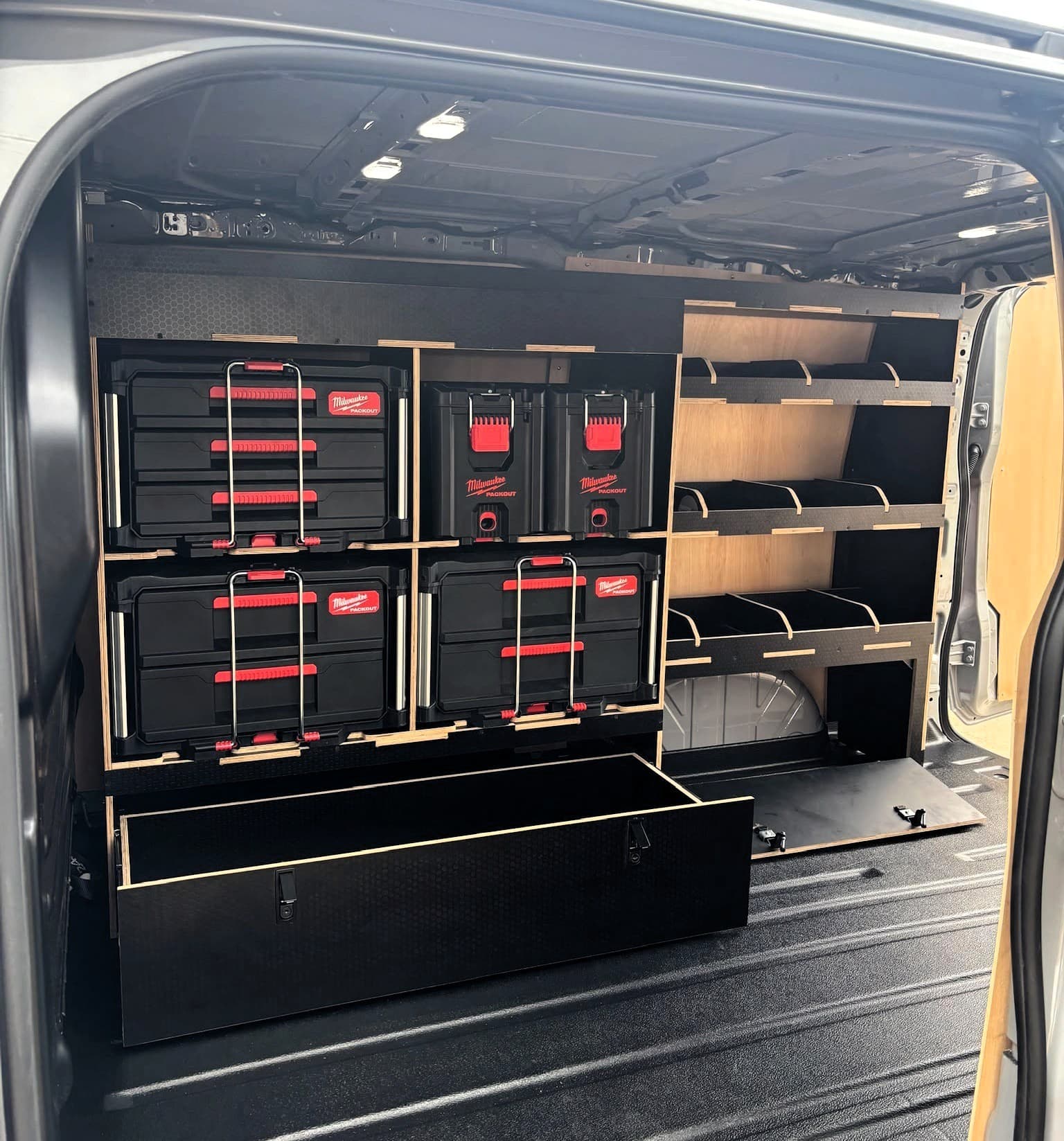
Groundworks doesn't need more shelving. It needs a van built for weight, water and grit, with the expensive kit secured and the consumables visible. Take a look at our van racking and storage systems to see how heavy-duty drawers, hoseable sections and secure storage build into a full fit-out, or book a free design consultation and we'll plan one around your van and the kit you actually carry.
Tags
- groundworkers
- van racking
- groundworks van setup
- heavy tool storage
- site safety gear